
Durable Objects: A Foundation for Stateful Applications
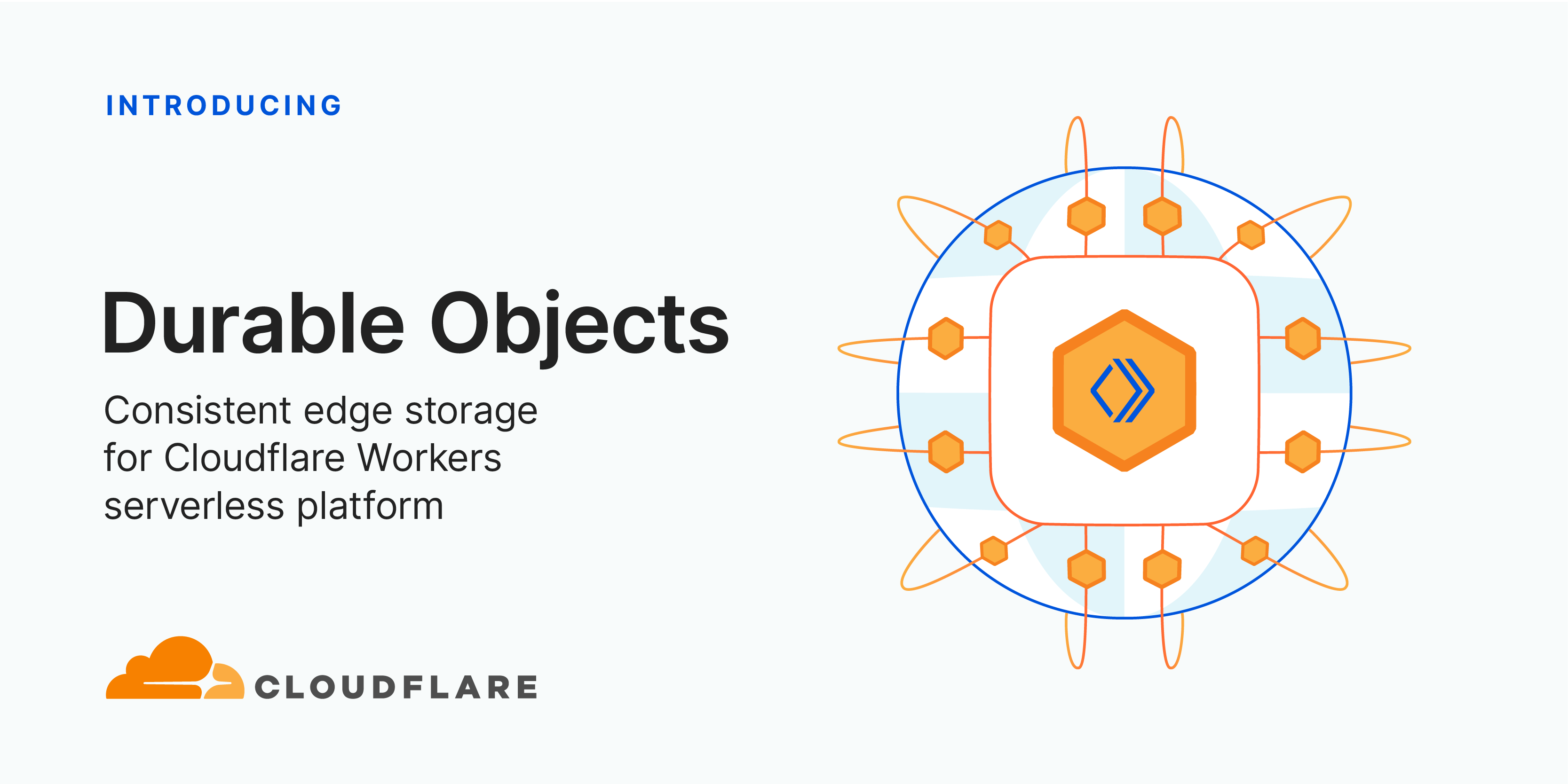
Durable Objects are Cloudflare’s solution for building stateful applications at global scale. Think of them as globally accessible, single-writer functions that retain state across requests. This is different from typical serverless functions, which are stateless and don’t inherently remember anything between invocations. They provide a way to associate data with a specific user session or application instance, allowing for complex interactions without relying on external databases for every operation.
It’s important to understand that Durable Objects aren’t a database replacement. While they do store state, they are best suited for applications needing moderate amounts of state that change frequently. Trying to use them for massive data storage or complex queries will quickly run into limitations. Their strength lies in managing application logic and coordinating interactions, not in serving as a general-purpose data store. They are fantastic for things like game state, shopping carts, or collaborative editing tools.
The core idea is that each Durable Object lives in a specific Cloudflare datacenter and can only be written to by one request at a time. This ensures consistency and avoids race conditions. They’re designed to be highly resilient and automatically handle failures, making them a reliable foundation for building scalable, stateful applications. This foundation is where Cloudflare Agents come into play, adding another layer of power.
The Challenge of Complex Logic in Durable Objects
While Durable Objects provide a solid base for stateful applications, writing complex logic directly within them can become challenging surprisingly quickly. Everything is done in JavaScript or TypeScript, which is powerful, but managing intricate state transitions and interactions can lead to messy and hard-to-maintain code. It’s easy to end up with deeply nested callbacks and convoluted logic, especially as your application grows.
One significant hurdle is coordinating multiple Durable Objects. If your application requires interactions between several objects, managing the flow of data and ensuring consistency can be difficult. Asynchronous operations also add complexity. Handling promises and callbacks effectively within the Durable Object environment requires careful planning and execution. It's a matter of keeping the code readable and manageable as the application scales.
Essentially, Durable Objects excel at holding state, but they don't inherently provide tools for orchestrating complex workflows. This is where Cloudflare Agents step in, offering a way to manage that complexity and build more sophisticated stateful applications.
Introducing Cloudflare Agents: Orchestration for Durable Objects
Cloudflare Agents are designed to address the limitations of managing complex logic directly within Durable Objects. They provide a way to orchestrate Durable Objects, allowing you to define workflows that span multiple objects and handle asynchronous operations more cleanly. Think of Agents as a higher-level abstraction layer built on top of Durable Objects, simplifying the development of stateful applications.
It's crucial to understand that Agents aren’t meant to replace Durable Objects. They complement them, providing the tools needed to manage complexity. Agents allow you to define these workflows in a declarative manner – you specify what you want to happen, and the Agent handles the how. This separation of concerns makes your code more readable, maintainable, and testable.
The core idea is to break down complex tasks into smaller, manageable steps, and let the Agent coordinate the execution of those steps across multiple Durable Objects. This allows you to build sophisticated applications without getting bogged down in the details of low-level state management. It’s about making the development process more efficient and less error-prone.
How Agents Handle Asynchronous Operations and Coordination
Agents significantly improve how asynchronous operations are handled compared to writing directly against Durable Objects. They provide a more structured way to manage callbacks and promises, avoiding the dreaded “callback hell” that can plague asynchronous JavaScript code. This inherently makes the code easier to reason about and debug. The Agent framework manages the execution flow for you.
Coordination between multiple Durable Objects is also streamlined. Agents allow you to define 'tasks' or 'steps' that can be executed in a specific order, with dependencies between them. This ensures that operations are performed in the correct sequence and that data is passed between objects reliably. It's a way to enforce a clear workflow and prevent race conditions or inconsistent state.
While the specific mechanisms are likely internal to the Agent runtime, the benefit is a more robust and predictable way to manage asynchronous operations and coordinate interactions between Durable Objects. This results in applications that are more resilient and easier to scale. It allows developers to focus on the application's logic, not the plumbing.
Agents and AI: A Natural Fit
The name 'Agents' is no accident. These tools are particularly well-suited for integrating with AI models and building AI-powered applications. They can act as intermediaries between clients and AI services, managing the state and context needed for intelligent interactions. This is a powerful combination, enabling you to build applications that are both stateful and intelligent.
For example, an Agent could handle the conversation history for a chatbot, pass that history to an AI model for analysis, and then store the model’s response back in the Durable Object. This allows the chatbot to maintain context across multiple interactions and provide more personalized responses. The YouTube source highlights deploying AI agents, demonstrating this capability.
By abstracting away the complexities of managing state and coordinating interactions, Agents make it easier to build and deploy AI-powered applications at scale. They provide a solid foundation for creating intelligent, responsive, and stateful experiences.
Defining Workflows with the Agents DSL
Agents utilize a declarative approach to define workflows, and this is achieved through a Domain Specific Language (DSL). While specific details are still emerging, the DSL allows you to specify the steps involved in a workflow, the order in which they should be executed, and the dependencies between them. This is done through a configuration file, which outlines the logic of the agent.
The syntax typically involves defining 'activities,' which represent individual tasks that can be executed, and 'flows,' which define the sequence of activities. You can pass data between activities and define conditions that determine which activities are executed. This declarative style makes the workflows easy to understand and modify. It also allows for greater flexibility and scalability.
This approach contrasts with writing imperative code, where you explicitly specify every step of the process. With the Agents DSL, you focus on what you want to achieve, and the Agent runtime takes care of the how. This simplifies development and reduces the risk of errors. The declarative nature also makes it easier to test and debug the workflows.
Comparing Durable Objects and Agents: A Decision Guide
Choosing between Durable Objects and Agents depends on the complexity of your application. Durable Objects are a great choice for simple stateful applications with minimal coordination requirements. If you just need to store and retrieve data, and your logic is straightforward, Durable Objects are likely sufficient. They're also a good starting point for smaller projects.
However, if your application involves complex workflows, interactions between multiple Durable Objects, or integration with AI models, Agents are the better choice. They provide the tools needed to manage that complexity and build more sophisticated applications. They reduce development time and improve code maintainability.
Here's a quick breakdown:
- Durable Objects: Simple state management, minimal coordination, low complexity, fast development for basic use cases.
- Agents: Complex workflows, coordination between multiple objects, AI integration, improved maintainability, suitable for larger applications.
Durable Objects vs. Cloudflare Agents
| Feature | Durable Objects | Cloudflare Agents |
|---|---|---|
| Complexity | Generally Lower | Potentially Higher |
| Coordination | Explicit, developer-managed | Implicit, Agent framework handles |
| AI Integration | Limited; requires external integrations | Designed for AI/LLM workflows |
| Development Effort | More boilerplate for complex state | Faster prototyping for AI-driven tasks |
| Scalability | Excellent, horizontally scalable | Excellent, leverages Cloudflare's network |
| State Management | Developer responsibility | Managed by the Agent framework |
| Use Cases | General purpose stateful functions | AI-powered automation, chatbots, workflows |
Qualitative comparison based on the article research brief. Confirm current product details in the official docs before making implementation choices.

No comments yet. Be the first to share your thoughts!