
The Rise of Stateful Serverless: Why You Need to Consider Durable Objects and Agents
Serverless computing has revolutionized application development, but traditionally it’s been best suited for stateless functions. Maintaining state – remembering information between requests – presents a significant challenge. Building applications that need to track user sessions, manage game state, or coordinate distributed processes becomes much more complex. Cloudflare is actively addressing this with two key technologies: Durable Objects and Cloudflare Agents.
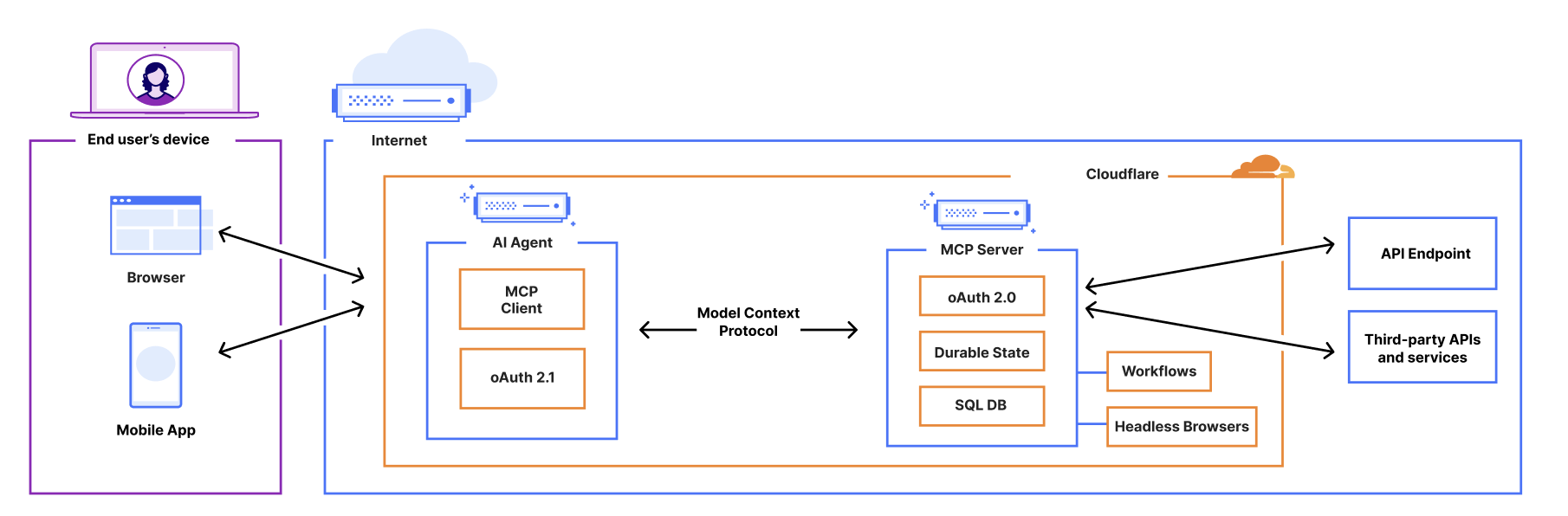
Durable Objects provide a way to build stateful applications directly on the Cloudflare edge network. More recently, Cloudflare introduced Agents, allowing you to deploy AI-powered logic alongside your applications. These Agents can then interact with Durable Objects, creating a powerful combination of compute and persistent storage. Understanding the strengths of each, and how they integrate, is becoming increasingly important for modern application architecture.
Durable Objects: Persistent State at the Edge
Durable Objects are Cloudflare’s core offering for building stateful applications. They are essentially serverless functions with a crucial addition: persistent, isolated storage. Each Durable Object gets a globally-unique identifier, meaning you can reliably access the same object from anywhere in the world. This makes them ideal for coordinating interactions between users across different geographic locations.
Under the hood, Durable Objects run within the Cloudflare Workers environment, but they're distinct from standard Workers. They combine compute with storage, allowing you to read and write data directly within the object's lifecycle. Cloudflare offers two storage backend options: SQLite, available on all plans including the free tier, and a key-value store, which is exclusive to paid plans. The key-value store provides faster access and greater scalability, but comes with an associated cost.
The globally-unique identifier is fundamental to how Durable Objects work. It’s not an IP address or a domain name, but a unique name that Cloudflare uses to route requests to the correct object instance. This ensures consistency and reliability, even in a distributed environment. You define the behavior of a Durable Object using JavaScript or TypeScript, similar to standard Cloudflare Workers.
What Problems Do Durable Objects Solve?
Durable Objects excel at scenarios where you need to maintain state across multiple requests and coordinate data between users. Consider a simple shopping cart: without Durable Objects, you’d need a centralized database to track each user’s selections. With Durable Objects, the shopping cart is the state, and it lives close to the user, reducing latency and improving performance.
Here are some specific use cases where Durable Objects shine:
- Multiplayer Game State: Track player positions, scores, and inventory in real-time.
- Shopping Carts: Persistently store items added to a user’s cart.
- Session Management: Maintain user session data without relying on cookies or centralized databases.
- Collaborative Editing: Enable multiple users to edit a document simultaneously, with changes synchronized in real-time.
- Distributed Counters: Implement globally-consistent counters for tracking events or metrics.
Durable Object Use Cases
- Multiplayer Game Backend - Durable Objects can maintain the game state for a specific match, allowing players around the globe to interact in real-time with low latency, as all interactions are routed to the same instance.
- Shopping Cart Management - A Durable Object can store a user's shopping cart across sessions and devices, ensuring items persist even if the user leaves the site and returns later, providing a seamless shopping experience.
- Real-time Collaboration Tools - Durable Objects can manage shared document editing sessions, ensuring all users see the same updates concurrently, enabling features like Google Docs or Figma.
- Distributed Task Queues - Durable Objects can act as reliable task queues, distributing work across multiple workers and ensuring tasks are completed even in the face of failures, similar to systems built with Redis.
- Session Management - Durable Objects provide a scalable and reliable way to store user session data, enabling features like persistent logins and personalized experiences without relying on centralized databases.
- Leaderboards & High Scores - Durable Objects can efficiently store and update high scores for games or applications, providing a globally consistent leaderboard experience for users worldwide.
- Access Control Lists (ACLs) - Durable Objects can manage permissions and access control for resources, ensuring only authorized users can access sensitive data or functionality, improving application security.
Cloudflare Agents: AI-Powered Compute on the Edge
Cloudflare Agents represent a recent expansion of the Cloudflare platform into the realm of artificial intelligence. These Agents are designed to be autonomous entities that can perform tasks and make decisions, all within the Cloudflare network. They're built using the `cloudflare-agents-sdk`, which provides the tools and libraries needed to create and deploy Agents.
The key idea behind Agents is to bring AI processing closer to the user. Rather than sending data to a centralized AI server, Agents execute directly on Cloudflare’s edge, reducing latency and improving privacy. They are written in JavaScript or TypeScript, and can be triggered by various events, such as HTTP requests or scheduled alarms. This allows for reactive and proactive AI applications.
Agents and Durable Objects: A Powerful Combination
The true power of Cloudflare’s platform emerges when you combine Agents and Durable Objects. Agents can treat Durable Objects as stateful micro-components, leveraging their persistent storage and coordination capabilities. This allows you to build sophisticated applications that combine AI-powered logic with reliable state management.
For example, imagine a multiplayer game where an Agent is responsible for enforcing game rules and managing player interactions. The game state – player positions, scores, and inventory – is stored in a Durable Object. The Agent reads this state, applies game logic, updates the state, and then writes it back to the Durable Object. Because the Durable Object is globally distributed, all players see a consistent view of the game world.
Other examples include an Agent updating a collaborative document stored in a Durable Object, or an Agent processing user data stored in a Durable Object to personalize recommendations. The Agent handles the logic, while the Durable Object provides the memory. This separation of concerns simplifies development and improves scalability.
- Game State Management: Agents can enforce game rules and update game state stored in Durable Objects.
- Collaborative Document Editing: Agents can handle concurrent edits and maintain document consistency.
- Personalized Recommendations: Agents can analyze user data stored in Durable Objects to provide tailored recommendations.
Agent-Durable Object Interaction Pattern
This example demonstrates how a Cloudflare Worker (acting as an Agent) can interact with a Durable Object to read, process, and store data. The Durable Object maintains state across requests, while the Worker handles the business logic and coordination.
// Durable Object class definition
export class DataProcessor {
  constructor(state, env) {
    this.state = state;
    this.env = env;
  }

  async fetch(request) {
    const url = new URL(request.url);

    if (url.pathname === '/store') {
      const data = await request.json();
      await this.state.storage.put('userData', data);
      return new Response('Data stored successfully');
    }

    if (url.pathname === '/retrieve') {
      const userData = await this.state.storage.get('userData');
      return new Response(JSON.stringify(userData || {}));
    }

    return new Response('Not found', { status: 404 });
  }
}

// Cloudflare Worker (Agent) interacting with Durable Object
export default {
  async fetch(request, env, ctx) {
    // Get Durable Object instance
    const id = env.DATA_PROCESSOR.idFromName('user-session');
    const durableObject = env.DATA_PROCESSOR.get(id);

    // Agent performs operation: read data from Durable Object
    const response = await durableObject.fetch(
      new Request('https://dummy-url/retrieve')
    );

    const userData = await response.json();

    // Agent processes the data
    const processedData = {
      ...userData,
      processed: true,
      timestamp: Date.now(),
      requestCount: (userData.requestCount || 0) + 1
    };

    // Store processed data back to Durable Object
    await durableObject.fetch(
      new Request('https://dummy-url/store', {
        method: 'POST',
        body: JSON.stringify(processedData)
      })
    );

    return new Response(JSON.stringify({
      message: 'Data processed successfully',
      data: processedData
    }));
  }
};
In this pattern, the Durable Object serves as a stateful storage layer with its own compute capabilities, while the Worker acts as the orchestrating agent. The Worker retrieves data from the Durable Object, performs processing operations, and stores the results back. This separation allows for scalable stateful operations where the Durable Object handles persistence and the Worker manages request routing and data transformation.
When to Choose Durable Objects Alone
Not every application needs the complexity of Cloudflare Agents. If you simply need to manage state and don’t require AI-powered logic or complex decision-making, Durable Objects alone might be sufficient. This is especially true for simpler use cases like basic session management or storing user preferences. Using just Durable Objects reduces both development effort and operational costs.
The Workers free plan also limits you to SQLite storage with Durable Objects, so if you need the performance of the key-value store, you’ll need to use a paid plan anyway. In these cases, keeping the architecture simpler with only Durable Objects can be a smart choice.
When to Combine Agents and Durable Objects
The combination of Agents and Durable Objects truly shines when you need applications that can react intelligently to events and make dynamic decisions. If you're building an application that requires AI-powered logic, complex data processing, or personalized experiences, then combining these two technologies is a powerful approach.
Consider a fraud detection system. An Agent could monitor transactions stored in a Durable Object, analyze patterns, and automatically flag suspicious activity. Or imagine a chatbot that uses an Agent to understand user intent and retrieve information from a Durable Object containing a knowledge base. The Agent provides the intelligence, while the Durable Object provides the persistent context.
Here's a quick comparison:
- Simple State Management: Durable Objects Alone
- AI-Powered Logic & State: Agents + Durable Objects
- Complex Data Processing & State: Agents + Durable Objects
- Dynamic Decision Making & State: Agents + Durable Objects
Comparing Durable Objects and Durable Objects with Cloudflare Agents
| Approach | Ideal Application | Key Consideration | Explanation |
|---|---|---|---|
| Durable Objects Only | Simple state management and coordination | Limited complex logic handling | Suitable when application logic is straightforward and primarily involves managing persistent data and basic coordination between clients. |
| Durable Objects Only | Applications needing globally distributed state | Requires all logic within Workers | Best when you need a globally consistent state accessible from anywhere, and can implement all necessary functionality within the Cloudflare Workers environment. |
| Durable Objects + Agents | Tasks requiring external API interaction | Increased architectural complexity | Beneficial when your application needs to interact with services outside the Cloudflare network, such as third-party APIs or legacy systems. |
| Durable Objects + Agents | Workflows with complex decision-making | Potential for increased latency | Useful when you need to orchestrate complex workflows involving multiple steps and conditional logic, leveraging the capabilities of Agents for more sophisticated processing. |
| Durable Objects + Agents | Applications benefiting from AI capabilities | Agent development and maintenance overhead | Appropriate when you want to integrate AI-powered features, such as natural language processing or image recognition, into your application logic. |
| Durable Objects + Agents | Scenarios needing asynchronous processing | Debugging can be more challenging | Effective for tasks that can be performed asynchronously, allowing Agents to handle long-running operations without blocking the main Durable Object logic. |
| Durable Objects Only | Real-time collaborative applications | Scaling is managed by Cloudflare | Well-suited for applications where multiple users need to interact with the same state concurrently, relying on Cloudflare's infrastructure for scalability. |
Qualitative comparison based on the article research brief. Confirm current product details in the official docs before making implementation choices.

No comments yet. Be the first to share your thoughts!