
Programming courses budget
The cost of learning to code ranges from free self-paced modules to university-backed certificates that run into the thousands. The right choice depends on how much time you can commit and whether you need a credential to show employers. Free resources like freeCodeCamp or Harvard’s CS50 offer excellent foundations without financial risk. Paid platforms like Coursera or Udemy provide structured paths, graded assignments, and certificates that carry more weight on a resume.
When evaluating budget, look beyond the sticker price. Many platforms offer financial aid or audit tracks for free. If you choose a paid course, check if it includes a money-back guarantee. This allows you to test the teaching style without a long-term commitment. For AI-assisted development, prioritize courses that teach you how to read and debug code generated by tools, rather than just memorizing syntax.



As an Amazon Associate, we may earn from qualifying purchases.
Don’t assume that higher cost equals better learning. A $15 Udemy course during a sale can be just as effective as a $2,000 bootcamp if the content is current. Focus on projects you can build. A portfolio of working applications is worth more to hiring managers than a certificate alone. Start with a low-cost or free option to validate your interest before investing in advanced certifications.
Shortlist real options
Finding a programming course that actually teaches you to use AI tools effectively requires looking past the hype. The market is flooded with generic "learn to code" bootcamps that treat AI as an afterthought. We have filtered the landscape to highlight courses that integrate AI-assisted development into their core curriculum, focusing on practical application rather than theory alone.
The following comparison table breaks down the strongest contenders based on structure, cost, and AI integration depth. These options range from university-backed credentials to self-paced platforms that prioritize immediate, hands-on coding practice with modern tools.
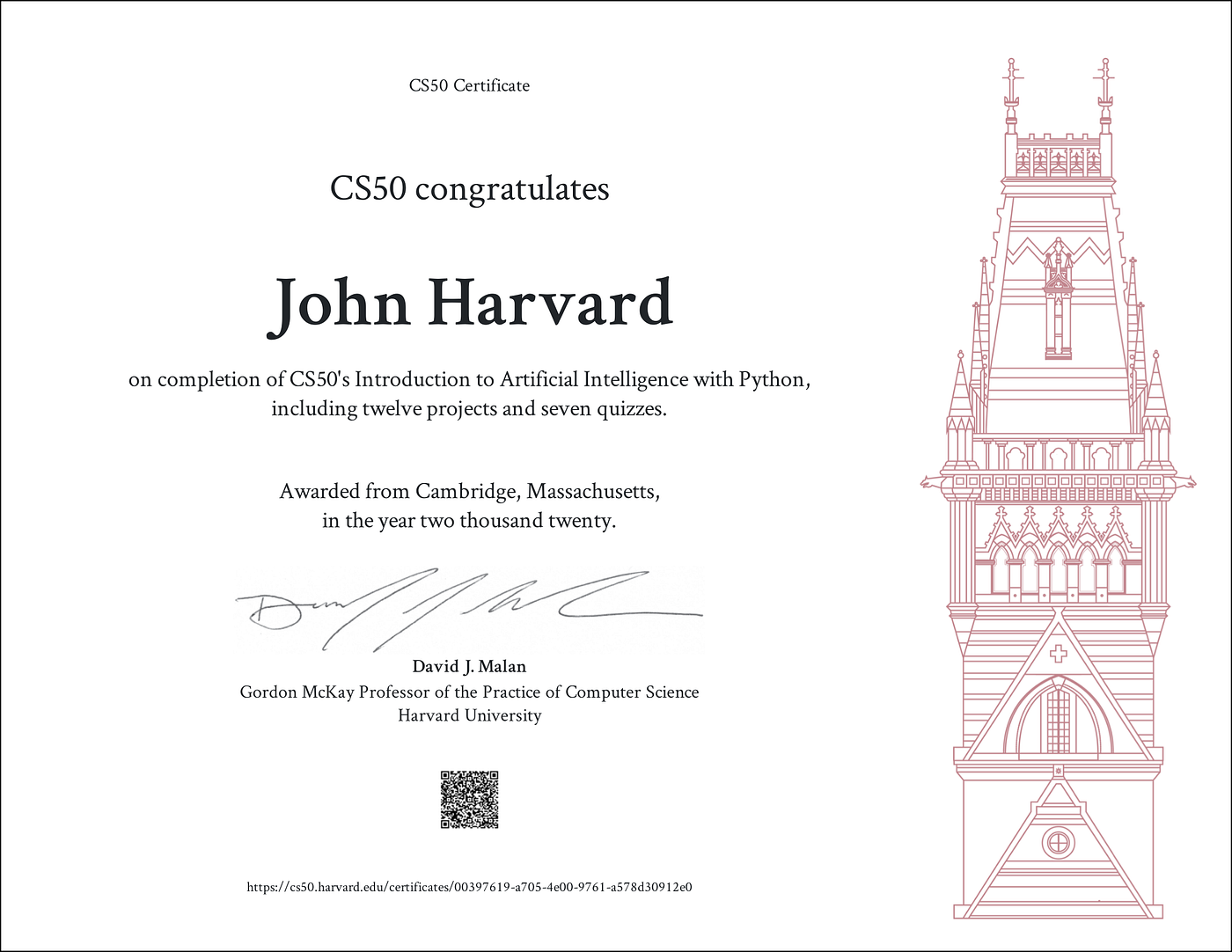
Harvard CS50’s AI with Python
Harvard’s CS50 offers the most rigorous academic approach to AI-assisted development. While not exclusively about "prompt engineering," it teaches the underlying logic required to understand what AI models are actually doing. This is crucial for developers who need to debug AI-generated code or understand its limitations. The course is free to audit, making it a low-risk entry point for serious learners.
University of Michigan’s Programming in Python
Hosted on Coursera, this course provides a structured path for those who prefer guided learning with a certificate. It covers Python fundamentals and includes projects that can be enhanced with AI tools. The subscription model allows you to pause and resume, which is helpful if you are balancing work and study. It is less focused on AI specifically but provides the solid coding base needed to leverage AI effectively later.
The Odin Project
The Odin Project is a favorite among self-taught developers for its no-nonsense, open-source curriculum. It does not explicitly market itself as an "AI course," but its emphasis on building real-world projects encourages learners to use AI as a pair programmer. This approach teaches you to write code that AI can then help refine, rather than relying on it to write everything from scratch. It is completely free and highly respected in the industry.
Udemy’s Web Developer Bootcamp
Colt Steele’s bootcamp is a classic entry point for web development. While it predates the current AI boom, its comprehensive coverage of JavaScript, HTML, and CSS provides the essential skills needed to understand web applications. You can supplement this course with external AI tools to accelerate your learning. It is best for those on a tight budget who want a broad overview before specializing.

As an Amazon Associate, we may earn from qualifying purchases.
Choosing the Right Path
If you are looking for a credential, Harvard’s CS50 or Coursera’s Python course are the strongest choices. They offer structure and recognition that can help when job hunting. If you are more interested in building things quickly and don’t mind figuring out the details yourself, The Odin Project provides a more authentic developer experience. Avoid courses that promise to make you an AI expert in a week; real proficiency comes from understanding the code, not just the prompts.
Inspect the expensive parts
Before committing to a programming course, treat your budget like a risk assessment. The "expensive" part isn't just the sticker price; it's the cost of wasted time on outdated curricula or platforms that don't match your learning style. A $50 course that teaches obsolete syntax is far more costly than a $500 course that teaches modern, in-demand frameworks.
Use this checklist to evaluate potential courses. If a program fails any of these checks, it’s likely a financial trap.
AI-assisted development moves fast. Check the "last updated" date on the syllabus. If the content hasn't been revised in the last 12 months, it’s likely teaching manual coding patterns that AI now handles automatically. Prioritize courses that explicitly mention AI tools, prompt engineering, or modern IDE integrations.
Passive video watching is the cheapest way to waste money. Look for courses that require you to build, debug, and deploy actual projects. If the curriculum lacks a capstone project or real-world coding challenges, you won’t develop the muscle memory needed for AI-assisted workflows.

Coding errors are inevitable. A course with an active Discord, Slack, or forum where instructors respond quickly is invaluable. Check recent reviews to see if students are getting help with code reviews. Isolated learning leads to frustration and abandonment, which is the most expensive outcome.

Not all certificates hold weight in the tech industry. Avoid courses that offer generic "completion" badges. Focus on programs affiliated with recognized universities, major tech companies (like Google or Microsoft), or platforms with rigorous vetting processes. Your resume filter needs proof of skill, not just attendance.


As an Amazon Associate, we may earn from qualifying purchases.
By focusing on these high-stakes variables, you avoid the hidden costs of bad education. The right course pays for itself by accelerating your path to competency.
Plan for ownership costs
A programming course is rarely a one-time purchase. The sticker price covers the initial video lectures, but the real investment is the time and tools required to actually learn. If you treat a course like a textbook you read once, you will likely forget the syntax within months. To make the cost stick, you need to budget for the ecosystem around the learning.
First, account for the environment. Most modern AI-assisted development requires a capable machine. If your current laptop struggles to run local LLMs or heavy IDEs like VS Code with multiple extensions, you may need to upgrade hardware or subscribe to cloud-based coding environments. These recurring cloud costs can add up quickly, especially if you are experimenting with heavy AI tools locally.
Second, factor in the subscription model. Many high-quality courses are now part of larger platforms (like Coursera, Udemy Plus, or specialized bootcamp prep sites) that charge monthly or annually. While this lowers the entry price, it creates a habit of continuous spending. If you stop paying, you lose access to updates, community support, and certificate verification. Calculate how many months you realistically need to finish the curriculum before the next price hike or renewal.
Finally, consider the cost of failure. Cheap courses often lack structured feedback. Without a mentor or peer review, you might spend weeks debugging a concept that a 10-minute explanation could have solved. This "time tax" is the hidden ownership cost. A slightly more expensive course with included code reviews or community access often pays for itself by preventing you from getting stuck on basics.


As an Amazon Associate, we may earn from qualifying purchases.
The goal isn't to find the cheapest option, but the one that fits your actual workflow. If a course requires specific software or hardware you don't have, the "free" course becomes the most expensive one because of the overhead. Plan for the tools, not just the tuition.
Programming courses: what to check next
Choosing the right learning path often hinges on specific constraints like budget, prior experience, and career goals. Here are the most common practical objections readers face when selecting a course for AI-assisted development.
No comments yet. Be the first to share your thoughts!