
How interviews are changing in 2026
Coding interviews are evolving. The days of being grilled on obscure trivia are fading, thankfully. Companies are now prioritizing candidates who can actually solve real-world problems, demonstrating practical coding ability and a solid understanding of fundamental principles.
Companies need engineers who contribute on day one. I see system design questions popping up even for junior roles now. Teams want to know you can think about how a database scales before you write the first line of a schema.
The rise of AI tools like GitHub Copilot and ChatGPT also influences the process. While these tools won’t replace the need for strong coding skills, interviewers are increasingly interested in how candidates leverage them. Expect questions about how you’d use AI to improve your workflow or debug code. The key is to show you understand the tools, but you’re not reliant on them to compensate for a lack of core competence.
Patterns to learn on LeetCode
LeetCode is still the go-to platform for many candidates, but simply grinding problems isn’t enough. You need to focus on understanding the underlying patterns that appear repeatedly. Mastering these patterns will dramatically improve your efficiency and confidence.
Sliding Window is crucial for solving array and string problems efficiently. It’s about minimizing redundant calculations by maintaining a window of elements. A common mistake is not correctly handling the window boundaries.
Two Pointers is another essential pattern, particularly useful for sorted arrays. It allows you to traverse the array efficiently and compare elements. Don't forget to consider edge cases like empty arrays or arrays with only one element.
Fast & Slow Pointers is fantastic for detecting cycles in linked lists and finding the middle element. Many candidates struggle with visualizing how the pointers move. Merge Intervals is key for problems involving overlapping intervals, and understanding how to efficiently merge them. Finally, Dynamic Programming might seem daunting, but learning to recognize when it applies is a game-changer. Start with simple problems and build your way up. The biggest mistake is trying to apply DP when a simpler approach is sufficient.
- Sliding window for processing strings without re-scanning.
- Two Pointers: Traverse sorted arrays with optimized comparisons.
- Fast & Slow Pointers: Detect cycles and find middle elements in linked lists.
- Merge Intervals: Combine overlapping intervals effectively.
- Dynamic Programming: Break down complex problems into smaller, overlapping subproblems.
🪟 Sliding Window Pattern: Maximum Sum Subarray
The sliding window pattern is one of the most fundamental techniques you'll encounter in coding interviews. It's particularly useful for problems involving contiguous subarrays or substrings. Let's implement a classic example that finds the maximum sum of a subarray with exactly k elements.
def max_sum_subarray_sliding_window(arr, k):
    """
    Find the maximum sum of a subarray of size k using sliding window technique.
    Time Complexity: O(n), Space Complexity: O(1)
    """
    # Edge case: if array length is less than k
    if len(arr) < k:
        return None

    # Step 1: Calculate sum of first window of size k
    window_sum = 0
    for i in range(k):
        window_sum += arr[i]

    # Initialize max_sum with the first window sum
    max_sum = window_sum

    # Step 2: Slide the window from left to right
    # Remove the leftmost element and add the rightmost element
    for i in range(k, len(arr)):
        # Slide the window: remove arr[i-k] and add arr[i]
        window_sum = window_sum - arr[i - k] + arr[i]

        # Update maximum sum if current window sum is greater
        max_sum = max(max_sum, window_sum)

    return max_sum

# Example usage and test cases
if __name__ == "__main__":
    # Test case 1: Basic example
    arr1 = [2, 1, 5, 1, 3, 2]
    k1 = 3
    result1 = max_sum_subarray_sliding_window(arr1, k1)
    print(f"Array: {arr1}, k={k1}")
    print(f"Maximum sum subarray of size {k1}: {result1}")  # Output: 9 (5+1+3)

    # Test case 2: All negative numbers
    arr2 = [-1, -2, -3, -4, -5]
    k2 = 2
    result2 = max_sum_subarray_sliding_window(arr2, k2)
    print(f"\nArray: {arr2}, k={k2}")
    print(f"Maximum sum subarray of size {k2}: {result2}")  # Output: -3 (-1+-2)

    # Test case 3: Single element window
    arr3 = [10, 20, 30, 40]
    k3 = 1
    result3 = max_sum_subarray_sliding_window(arr3, k3)
    print(f"\nArray: {arr3}, k={k3}")
    print(f"Maximum sum subarray of size {k3}: {result3}")  # Output: 40
🔍 **Key Insights:** • **Time Complexity**: O(n) - We traverse the array only once after calculating the initial window • **Space Complexity**: O(1) - We only use a constant amount of extra space • **Pattern Recognition**: Look for problems asking about "contiguous subarrays of size k" or "fixed-size windows" This sliding window approach is much more efficient than the brute force O(n×k) solution that would recalculate the sum for each possible subarray. The key insight is maintaining a running sum and updating it by removing the element that slides out and adding the element that slides in. Master this pattern, and you'll be ready to tackle similar problems like finding the longest substring with k distinct characters or the minimum window substring! 🚀
Handling behavioral questions
Many candidates focus so intently on technical skills that they neglect the behavioral portion of the interview. This is a huge mistake. Companies want to hire well-rounded individuals who can collaborate effectively and handle challenges gracefully.
The STAR method (Situation, Task, Action, Result) is your best friend. When answering behavioral questions, structure your responses using this framework. Be specific and provide concrete examples. For example, avoid saying “I’m a team player.” Instead, describe a time you successfully collaborated with a team to overcome a difficult obstacle.
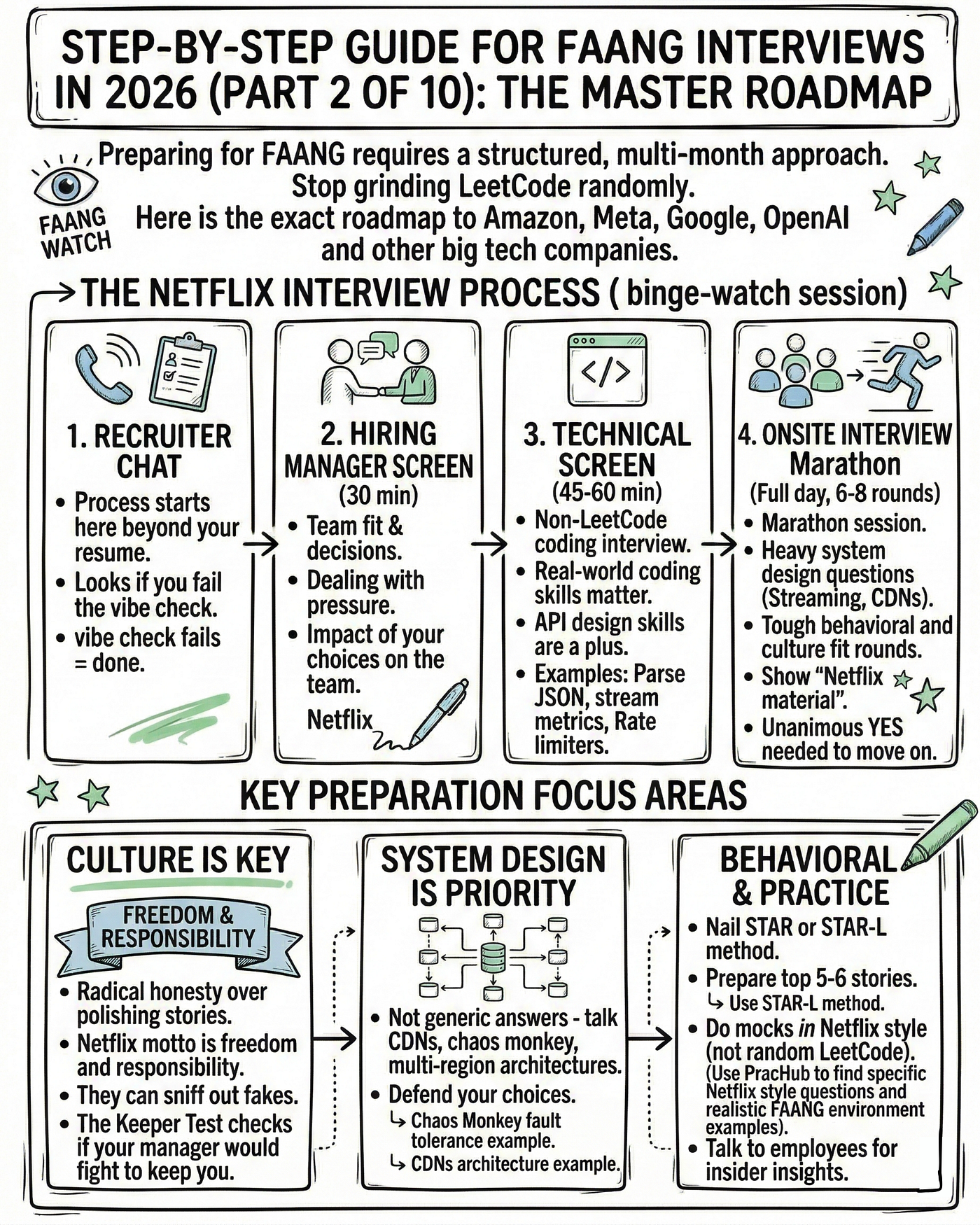
Be prepared for questions about conflict resolution, handling failure, and working in a team. Honesty and self-awareness are key. Don't try to present yourself as perfect; it’s okay to admit mistakes. Also, be ready to articulate why you’re interested in this specific company and role. Research the company’s values and culture and align your answers accordingly.
- Situation: Describe the context.
- Task: Explain your responsibility.
- Action: Detail the steps you took.
- Result: What actually happened because of your work.
System design basics
System design interviews assess your ability to think about the high-level architecture of a system. The goal isn't to write code; it’s to demonstrate your understanding of scalability, reliability, and consistency. These interviews can be intimidating, but a solid foundation in the fundamentals can go a long way.
Start by understanding the core trade-offs. For example, consistency and availability often have an inverse relationship. A system can be strongly consistent, but that may come at the cost of availability, and vice versa. Common questions include designing a URL shortener, a rate limiter, or a simple search engine.
Focus on clarifying requirements. Ask questions about the expected scale, the types of data being stored, and the desired level of performance. Don’t get bogged down in implementation details; focus on the high-level architecture. It's perfectly acceptable to say, “I’m not sure about the specifics of that implementation, but I would research…”
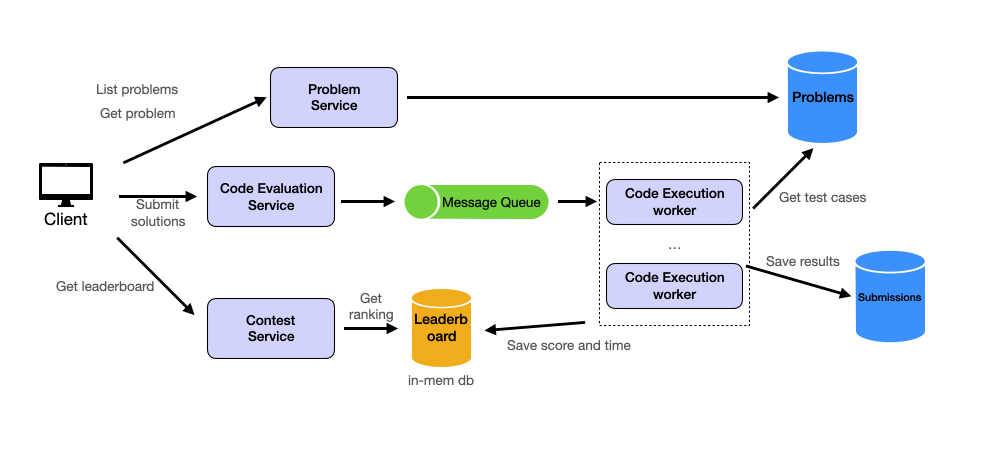
Consider common components like load balancers, databases, caches, and message queues. Understand the purpose of each component and how they interact with each other. Thinking about edge cases and potential bottlenecks is also critical. For example, how would your system handle a sudden spike in traffic?
Resources for practice
There's a wealth of resources available to help you prepare. LeetCode remains the dominant platform for practicing coding problems. HackerRank offers a different style of challenges, often more focused on specific skills. AlgoExpert provides a curated set of problems and video explanations, which can be helpful for understanding complex concepts.
Educative.io offers interactive courses on system design and other advanced topics. If you’re just starting out, Codecademy and freeCodeCamp are great resources for building a strong foundation in programming fundamentals. I personally found freeCodeCamp's curriculum very helpful when I was learning to code.
Mock interviews are invaluable. Platforms like Pramp and interviewing.io connect you with other candidates for peer-to-peer practice. These platforms allow you to get comfortable with the interview format and receive feedback on your performance. Don't underestimate the power of talking through your thought process out loud.
Coding Interview Prep Platform Comparison (2026)
| Platform Name | Focus | Mock Interviews | Pros | Cons |
|---|---|---|---|---|
| LeetCode | Data Structures & Algorithms 🥇 | Available (often community-based) | Extensive problem library, widely recognized by companies, strong discussion forums. | Can be overwhelming for beginners, System Design content is limited. |
| InterviewBit | Data Structures & Algorithms | Available (paid tiers) | Structured learning paths, focuses on interview-specific questions, good for building fundamentals. | Can feel restrictive if you prefer a more open-ended approach, less emphasis on behavioral questions. |
| AlgoExpert | Data Structures & Algorithms | Available (video explanations act as mock interviews) | Concise video explanations, well-organized content, focuses on common interview patterns. | Primarily focused on algorithms; System Design and behavioral prep are less covered. |
| Educative.io | Data Structures, System Design 💡 | Limited | Strong System Design courses, interactive learning environment, good for visual learners. | Can be more expensive than other options, mock interview availability is not a primary feature. |
| Pramp | Behavioral & Technical (peer-to-peer) | Core Feature: Peer Mock Interviews | Excellent for practicing communication skills, realistic interview experience, affordable. | Quality of mock interviews depends on your partner, less structured learning path. |
| Codecademy | Fundamentals, Data Structures | Limited | Beginner-friendly, interactive coding environment, good for learning core concepts. | Less focused on advanced interview questions, System Design coverage is minimal. |
| GeeksforGeeks | Data Structures, Algorithms, System Design | Limited | Vast resource library, covers a wide range of topics, free content available. | Content quality can vary, interface can be cluttered. |
Qualitative comparison based on the article research brief. Confirm current product details in the official docs before making implementation choices.
New tech to watch
The tech landscape is constantly evolving. In 2026, certain technologies will be in high demand. Cloud computing (AWS, Azure, GCP) is no longer optional; it's essential. Even a basic understanding of cloud concepts and services is expected.
Containerization with Docker and orchestration with Kubernetes are also becoming increasingly important. Companies are adopting these technologies to improve scalability and portability. Basic knowledge of these tools is a significant advantage.
While you don’t need to be a machine learning expert, a basic understanding of ML concepts is helpful. Familiarize yourself with common algorithms and applications. The demand for skills in languages like Go and Rust is also growing, as they’re often used for building high-performance systems.

No comments yet. Be the first to share your thoughts!