
The 2026 hiring market for new developers
Junior hiring in 2026 is messy. We aren't seeing the 2023-style mass layoffs, but companies have stopped hiring anyone with a pulse and a certificate. AI is eating the boring CRUD tasks juniors used to do, which means you now have to prove you can actually build and maintain the AI systems everyone is obsessed with.
Demand remains strongest for developers proficient in Python, JavaScript, and cloud technologies like AWS, Azure, and Google Cloud. However, the sheer number of people trying to break into the field means competition is fierce. Simply completing a course, even a well-regarded one, isn’t a guarantee of a job. Landing that first developer role requires a strategic approach and a willingness to put in the work after the learning phase.
Choosing between a bootcamp and teaching yourself isn't a matter of which is 'better.' It depends on your bank account and how much structure you need to stay focused. Both paths are a grind. Getting hired as a junior is difficult right now, and no specific learning method changes that reality.
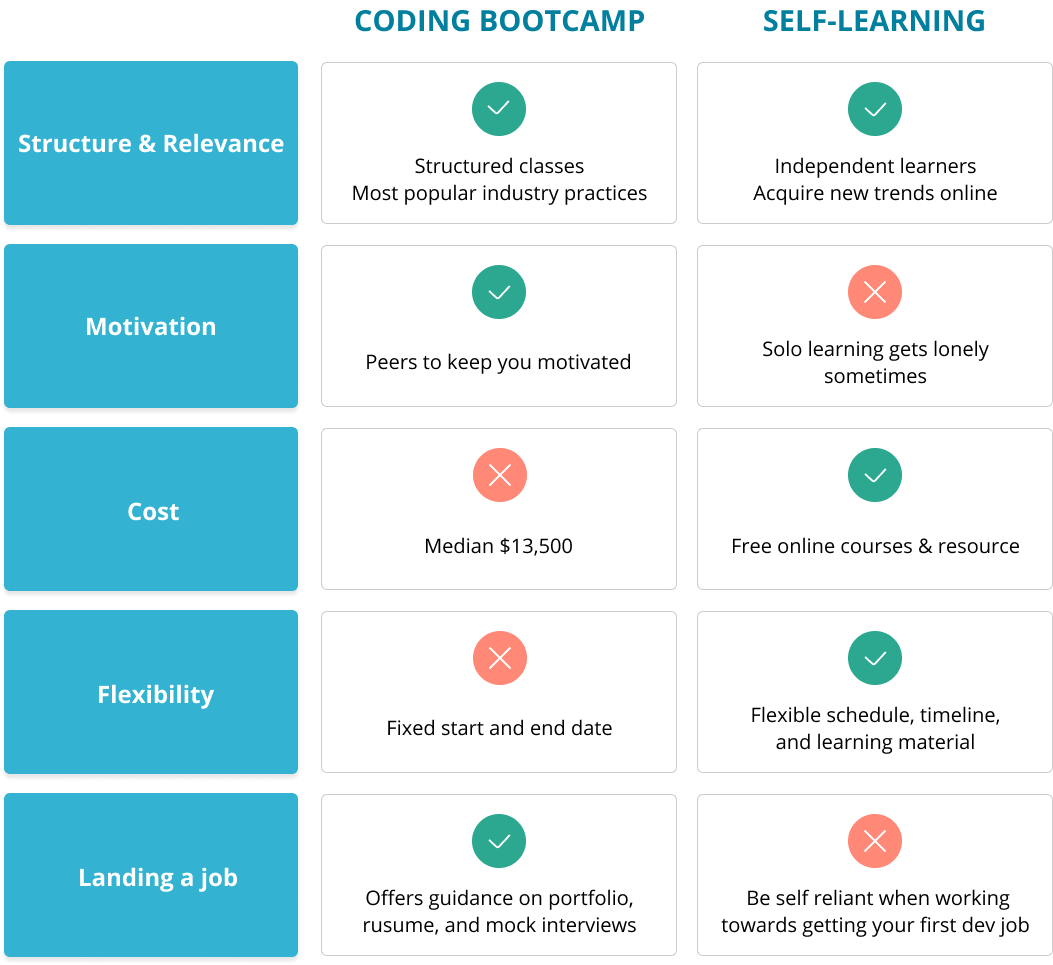
The high-speed, high-cost bootcamp route
Coding bootcamps promise an accelerated path to a tech career, typically condensing months of learning into a few intense weeks or months. This is a major draw for career changers or those who want to upskill quickly. The structure is a significant advantage – a defined curriculum, regular assignments, and instructor support can keep you on track.
Beyond the curriculum, bootcamps often emphasize career services, including resume workshops, mock interviews, and networking events. These resources can be invaluable for job searching. The built-in cohort environment also provides networking opportunities, and the shared experience can be a source of motivation. However, this speed comes at a cost – both financially and in terms of intensity.
The price of a coding bootcamp can range from $10,000 to $25,000, and some even exceed that. This is a substantial investment, and financing options are often available, but come with their own considerations. The fast pace can also lead to a superficial understanding of concepts, and the quality of bootcamps varies widely. Researching outcomes data – graduation rates, job placement rates, and average salaries – is essential before committing.
There are different types of bootcamps to consider. Full-time, in-person programs offer the most immersive experience, but require a significant time commitment. Part-time options allow you to continue working while learning, but the pace is slower. Online bootcamps offer flexibility, but require strong self-discipline. Choosing the right format depends on your individual circumstances and learning style. Be aware that the pressure cooker environment can lead to burnout for some students.
Teaching yourself for free
Self-learning offers a drastically different approach, leveraging the wealth of online resources available. Platforms like freeCodeCamp, Khan Academy, Udemy, Coursera, and edX provide courses on virtually any programming topic. YouTube is also a treasure trove of tutorials and educational content. The biggest advantage is the cost – many resources are free or relatively inexpensive.
The flexibility of self-learning is a major benefit. You can learn at your own pace, focus on the areas that interest you most, and fit learning around your existing commitments. This allows for specialization – you can dive deep into a specific technology or framework without being constrained by a bootcamp's curriculum. However, this freedom comes with a significant caveat: the need for self-discipline.
Without the structure of a bootcamp, it's easy to get distracted or lose motivation. You need to be able to set your own goals, create a learning schedule, and hold yourself accountable. A common pitfall is 'tutorial hell' – endlessly following tutorials without building your own projects. It’s vital to actively apply what you learn by working on personal projects and contributing to open-source.
- freeCodeCamp is still the gold standard for free, community-driven curriculum.
- Udemy/Coursera/edX: Platforms with a wide range of paid courses, often taught by university professors or industry experts.
- YouTube: A vast resource for tutorials, lectures, and coding demonstrations.
Learning Resources
- freeCodeCamp - A widely recognized, completely free platform offering comprehensive curricula in web development (HTML, CSS, JavaScript, React, Node.js) with a project-based learning approach and a strong community.
- The Odin Project - A free, open-source curriculum focused on full-stack web development. It emphasizes practical skills and provides a structured path, often favored by those seeking a bootcamp-style experience without the cost.
- Khan Academy - Offers introductory courses in computer programming, including JavaScript, HTML/CSS, and SQL. It's excellent for beginners and provides a solid foundation in core concepts.
- Udemy - The Complete Web Developer Course 2024 - A popular, affordable course (often available on sale) covering a broad range of web development technologies, including HTML, CSS, JavaScript, Node.js, and more. It’s frequently updated.
- Udemy - Python Bootcamp 2024 - Another highly-rated Udemy course, this one focusing on Python programming. It's suitable for beginners and covers a wide range of Python applications, from data science to web development.
- MDN Web Docs - Mozilla's Developer Network provides comprehensive documentation and tutorials for web technologies (HTML, CSS, JavaScript). It’s an invaluable reference resource for developers of all levels.
- Google Developers Training - Google offers free courses and resources on a variety of topics, including Android development, web development, and machine learning. These are often focused on Google’s specific technologies and frameworks.
Alternatives: Bridging the Gap
Recognizing the drawbacks of both bootcamps and self-learning, several alternatives have emerged. These options aim to provide structure and support without the high cost or rigid curriculum of a traditional bootcamp. Scrimba, for example, offers interactive coding screencasts that allow you to edit and experiment with the code directly in the browser.
Codecademy Pro provides a structured learning path with projects and personalized feedback. Nano-degrees, offered by platforms like Udacity, focus on specific skills and often include mentorship and career support. These programs typically take several months to complete and are more affordable than bootcamps.
Mentorship programs connect learners with experienced developers who can provide guidance and feedback. These can be found through online communities or dedicated mentorship platforms. The key benefit of these alternatives is that they address the shortcomings of both extremes – providing structure and support for self-learners and offering more flexibility and affordability than bootcamps.
Employer Perspectives: What Do They Value?
Hiring managers don't care about your certificate as much as they care about your GitHub. They want to see code that works in the real world. A portfolio of finished, deployed apps is the only way to prove you didn't just copy-paste your way through a tutorial.
GitHub contributions are also highly valued. Actively contributing to open-source projects demonstrates your ability to collaborate, write clean code, and learn from others. Participation in coding challenges and hackathons can showcase your problem-solving skills and passion for technology.
Employers also look for soft skills like communication, teamwork, and a willingness to learn. Be prepared to explain your projects, discuss your thought process, and demonstrate your ability to adapt to new challenges. While a bootcamp can help with these skills, they can also be developed through self-learning and community involvement.
Recent surveys suggest that employers are increasingly valuing practical experience over formal education. A well-curated portfolio and demonstrable skills can often outweigh a degree or bootcamp certificate. However, the reputation of the bootcamp does matter; some employers actively recruit from specific programs.
- A portfolio of 2-3 deep projects rather than 10 'todo' apps.
- GitHub: Demonstrate your coding ability and collaboration skills.
- Problem-solving: Be prepared to discuss your approach to challenges.
Employer Preference: Coding Path Comparison - 2026 Outlook
| Path | Portfolio Weight | GitHub Activity Weight | Problem-Solving Skills Weight | Communication Skills Weight | Time to Productivity Weight |
|---|---|---|---|---|---|
| Bootcamp | High | Medium | High | Medium | Medium |
| Self-Learning | Medium | High | Medium | Low | Low |
| Structured Online Courses (e.g., Coursera Specializations) | Medium | Medium | Medium | Medium | Medium |
| University/College Computer Science Degree | High | Medium | High | High | High |
| Apprenticeships | High | Medium | High | High | High |
| Microcredentials/Nanodegrees | Medium | Medium | Medium | Medium | Medium |
Illustrative comparison based on the article research brief. Verify current pricing, limits, and product details in the official docs before relying on it.
Success Stories: Real Paths to Employment
Let’s look at some real examples. Sarah, a former teacher, completed a 12-week online bootcamp focusing on full-stack JavaScript. She dedicated herself to building a portfolio of five projects, focusing on practical applications like a task management app and a simple e-commerce site. She networked actively on LinkedIn and attended virtual meetups, eventually landing a junior developer role at a small startup.
David, on the other hand, took the self-learning route. He used freeCodeCamp to learn Python and then built a data analysis project using publicly available datasets. He contributed to an open-source project on GitHub and actively participated in online coding communities. His portfolio and GitHub profile demonstrated his skills, and he secured a job as a data analyst at a larger corporation.
Maria, a career changer with a background in marketing, opted for a blended approach. She started with a Codecademy Pro subscription to learn the fundamentals of web development and then supplemented her learning with online tutorials and personal projects. She also found a mentor through a local tech meetup group. This combination of structure and support helped her land a front-end developer position.
These stories highlight that there's no single path to success. The key is to identify your learning style, set realistic goals, and consistently build your skills and portfolio. Authenticity and genuine enthusiasm for coding are also crucial.
Building a Portfolio That Stands Out
Regardless of your learning path, a strong portfolio is non-negotiable. It's your chance to demonstrate your skills to potential employers. Focus on quality over quantity – a few well-executed projects are more impressive than a dozen half-finished ones.
Choose projects that showcase your abilities and align with the types of jobs you're targeting. A full-stack application, a data analysis project, or a mobile app are all good options. Be sure to include clear documentation and a well-designed user interface. Host your portfolio on a platform like GitHub Pages, Netlify, or Vercel.
When applying for jobs, tailor your portfolio to the specific requirements of each position. Highlight the projects that are most relevant to the role. Be prepared to discuss your projects in detail during interviews, explaining your design decisions and the challenges you overcame.
- GitHub Pages: Free hosting for static websites.
- Netlify: Easy-to-use hosting with continuous deployment.
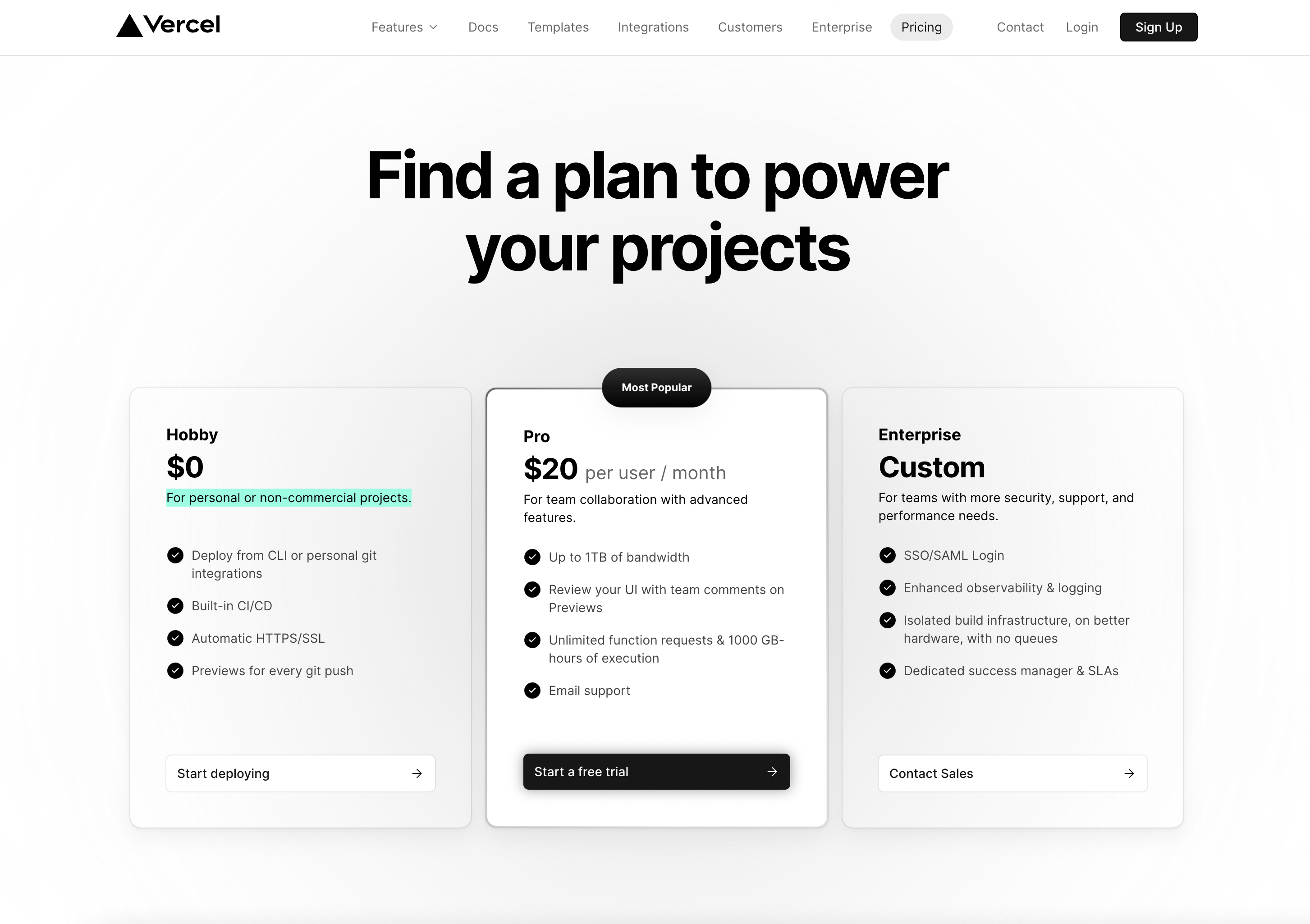
- Vercel: Focuses on front-end web applications.
Essential Tools for Your Coding Portfolio in 2026
Deploy static sites and web apps · Global CDN for fast loading · Continuous deployment from Git
Netlify's free tier is perfect for showcasing your personal projects with a custom domain and fast loading speeds.
Deploy frontend frameworks · Serverless functions · Global edge network
Vercel's free tier makes it easy to deploy modern web applications and impress potential employers with your live projects.

Build and deploy AI agents using Google's tools · Learn about security and scaling · Covers core concepts to advanced architectures
This book dives deep into Google's Agent Development Kit, essential for anyone looking to build and deploy sophisticated AI applications.
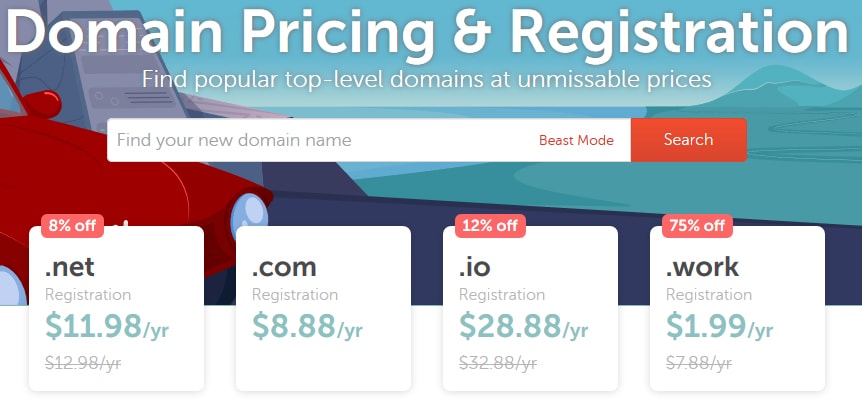
Register domain names · Domain privacy protection · Easy domain management
A professional domain name from Namecheap makes your portfolio stand out and shows you're serious about your online presence.

Comprehensive Git guide · Covers basic to advanced Git usage · Essential for version control
Mastering Git is non-negotiable for developers, and this free book is the definitive resource for understanding version control.
As an Amazon Associate I earn from qualifying purchases. Prices may vary.

No comments yet. Be the first to share your thoughts!