
Why look beyond bootcamps
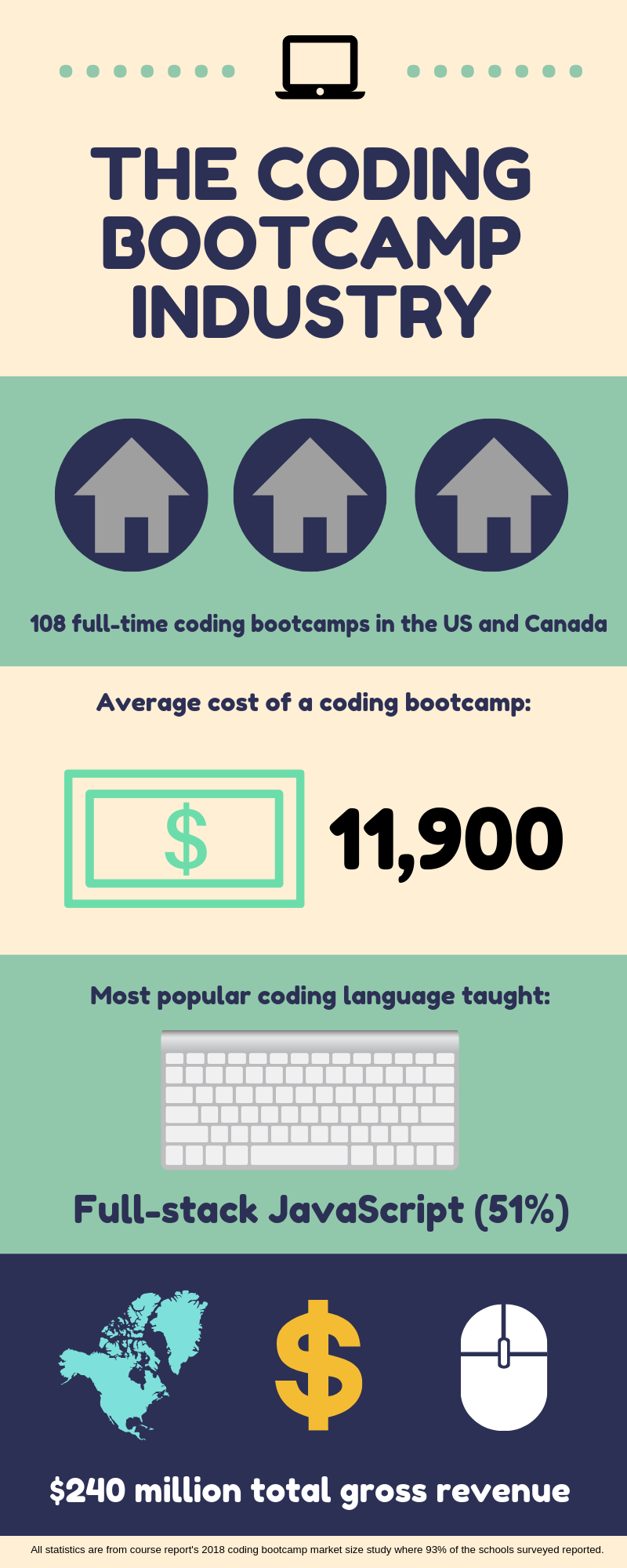
The traditional coding bootcamp model has long promised a fast track from zero to hired developer. But the economics have shifted. High tuition fees, often ranging from $10,000 to $20,000, come with rigid schedules and intense pressure that doesn’t suit everyone. For many, the return on investment is no longer guaranteed, especially as the entry-level market becomes more competitive.
Choosing coding bootcamp alternatives offers two distinct advantages: flexibility and cost control. You can study part-time while keeping your current job, or dive deep full-time without the stress of a cohort-based deadline. This self-paced approach allows you to tailor your curriculum to the specific technologies you want to master, rather than following a standardized syllabus designed for the masses.
While bootcamps provide structure and career support, they often bundle these services into the high price tag. By going self-directed, you pay only for the resources you use. This doesn’t mean you’re on your own; it means you have the freedom to curate your own learning path using free and low-cost resources that are often just as effective as expensive programs.
Structured learning platforms compared
If a full-time bootcamp feels like a financial leap too far, structured online platforms offer a middle ground. They provide the curriculum and community support of a traditional program without the $15,000+ price tag or the requirement to quit your job. The key is finding a platform that matches your learning style and budget.
Most of these alternatives fall into two camps: subscription-based platforms with guided paths (like Codecademy Pro or Coursera) and project-based communities (like freeCodeCamp or AlgoCademy). The former gives you a clear roadmap, while the latter lets you build a portfolio at your own pace.
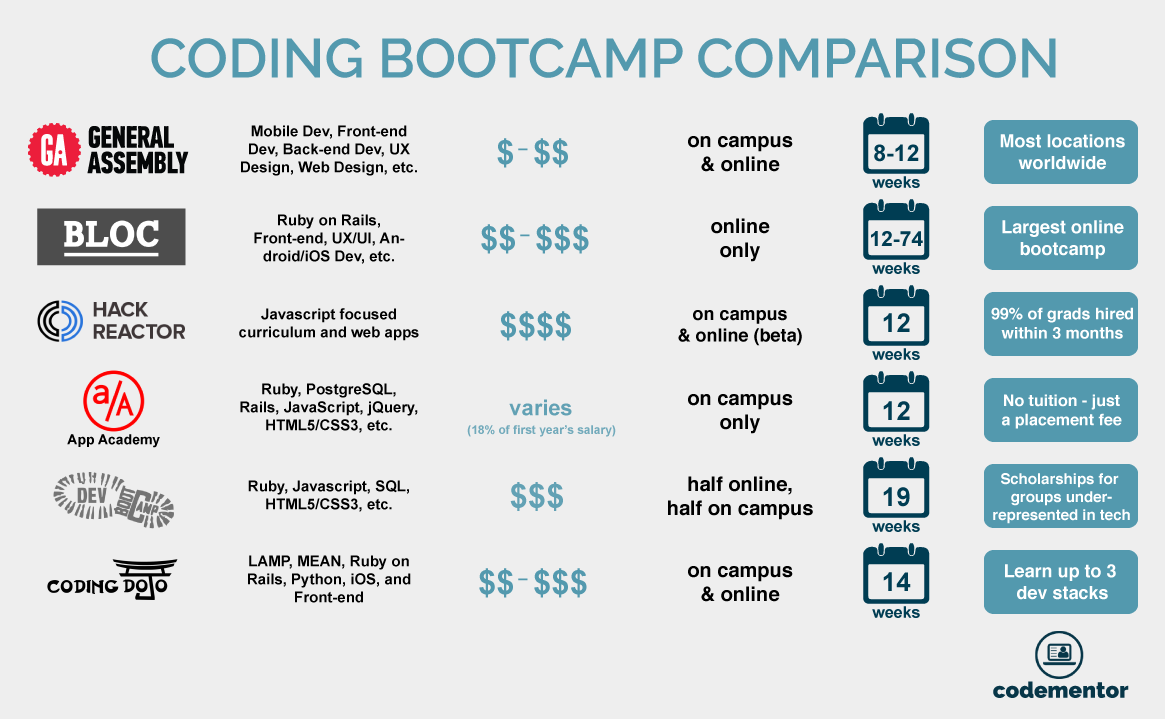
To help you decide, here is a breakdown of the top options based on cost, time commitment, and certification value.
| Platform | Cost | Time Commitment | Certification |
|---|
What developers actually say about coding bootcamp alternatives
The job market for junior developers has shifted, and so has the conversation online. While bootcamps still have their place, many developers are turning to self-directed learning paths that offer more flexibility and lower upfront costs. The consensus isn't that bootcamps are bad, but that they are no longer the only viable route into the industry.
On forums like r/codingbootcamp, the most common advice for those hesitant about the $10,000+ price tag is to start with free or low-cost resources. Platforms like freeCodeCamp, Scrimba, and Udemy are frequently cited as effective starting points. One user noted, "You could buy a Udemy course, use top, freecodecamp, Scrimba... Turing is a great [next step]." This suggests a modular approach: learn the basics cheaply, build a portfolio, and then decide if structured mentorship is worth the investment.
Employers are also adapting. According to ZipRecruiter, employers generally recognize bootcamp graduates, especially when they demonstrate strong technical skills and practical experience. This means that whether you come from a bootcamp or a self-taught background, the proof of your ability matters more than the certificate. The key is building a portfolio that speaks for itself.
Will employers respect a self-taught path?
It is the question that keeps self-taught developers up at night: does the lack of a bootcamp diploma or computer science degree hurt your chances? The short answer is no, but with a major caveat. Employers care far less about how you learned to code and far more about what you can build.
The industry has shifted away from credentialism toward portfolio-based hiring. A self-taught developer who can demonstrate clean code, problem-solving abilities, and practical experience is often more attractive than a bootcamp graduate who followed a rigid, uniform curriculum. Hiring managers want to see that you can hit the ground running, not just that you completed a course.
This is why your portfolio is your primary resume. It serves as tangible proof of your skills. When you apply for roles, you are not competing against bootcamp grads on paper; you are competing on the merit of your projects. A well-structured GitHub profile with real-world applications speaks louder than any certificate.
Research from ZipRecruiter confirms that employers generally recognize self-taught candidates who demonstrate strong technical skills. The key is to bridge the gap between theory and practice. Build projects that solve actual problems, contribute to open source, or document your learning journey. This shows initiative and adaptability—traits that are highly valued in the tech industry.
While bootcamps provide structure, self-taught developers often develop stronger independent problem-solving skills because they have to navigate ambiguous resources and troubleshoot without an instructor. This resilience is a significant asset in the workplace. Employers know that the tech landscape changes rapidly, and the ability to self-direct your learning is a lifelong skill.
Ultimately, the "coding bootcamp alternatives" you choose should align with your learning style, but they do not define your employability. Focus on building a robust portfolio, networking within the community, and preparing thoroughly for technical interviews. Your ability to deliver results will always outweigh the path you took to get there.
How to pick the right learning path
Choosing a coding bootcamp alternative isn't about finding the "best" option; it's about finding the one that fits your current life. Bootcamps are essentially time-and-money trades. They compress years of learning into months, but they demand high tuition and full-time availability. Your alternatives should offer the same structure without the financial or scheduling penalty.
To decide, you need to audit three things: your budget, your available hours, and how you actually learn best. Are you someone who needs a paid instructor to keep you on track, or do you thrive in self-directed environments? The right path balances these constraints.
1. Assess your budget and time
If you have zero budget but plenty of time, free resources like freeCodeCamp or the Odin Project are your best bet. They are rigorous and structured but require extreme self-discipline. If you have a limited budget (under $500) and a full-time job, look for affordable, self-paced courses on Udemy or Coursera. These allow you to learn in 30-minute chunks after work. Full-time students or career-switchers with savings might consider income share agreements (ISAs) or deferred tuition programs, which act like a middle ground between free and expensive bootcamps.
2. Match your learning style
Not everyone learns well from text-based tutorials. If you are a visual learner, video-heavy platforms like Scrimba or Codecademy Pro provide interactive feedback loops that mimic a classroom. If you prefer building real-world projects immediately, the Odin Project’s project-based curriculum forces you to set up a local development environment and debug code, which is closer to actual job experience than clicking through quizzes.
3. Validate the curriculum
Before committing to any path, check if the curriculum covers the modern stack employers actually use. A good alternative should include HTML, CSS, JavaScript, a framework like React, and basic backend concepts. Look for resources that offer career support, such as resume reviews or mock interviews, even if they aren't as robust as bootcamp services. Community forums, like the r/codingbootcamp subreddit, are excellent places to see what other self-taught developers are using and succeeding with.

Write down your exact weekly hours and maximum budget. Be honest. If you can only study 5 hours a week, a 12-week intensive alternative will fail. If you have $0, ignore paid platforms.
Look at the syllabi of 3-5 alternatives. Do they cover the same core skills as a standard bootcamp? Prioritize paths that include portfolio projects, not just video watching.
Spend one weekend on a free trial or introductory module of your top choice. If you hate the teaching style or interface, pivot now. It’s cheaper to switch platforms than to switch careers mid-stream.
-
Defined weekly study hours
-
Set maximum budget
-
Chosen primary learning platform
-
Reviewed curriculum for job-relevant skills
-
Completed one trial module
Common questions about coding bootcamp alternatives
Choosing a path outside the traditional bootcamp model often raises practical concerns. Here are answers to the most frequent questions from self-taught developers.
No comments yet. Be the first to share your thoughts!