
Beyond the Buzzwords: What Problems Do Cloudflare Agents & Durable Objects Solve?
Cloudflare Agents and Durable Objects are popular right now, but the marketing hides the specific problems they solve. Traditional serverless functions, while powerful, often struggle with cold starts – the delay when a function is invoked after a period of inactivity. This impacts responsiveness, particularly for latency-sensitive applications. Furthermore, managing state across multiple function invocations is typically handled by external databases, adding complexity and cost.
Scaling these serverless applications can also be tricky. Each function invocation is often stateless, forcing developers to implement complex logic for session management and data consistency. Durable Objects and Agents are Cloudflare’s attempt to tackle these challenges. They aren't replacements for all serverless use cases, but they offer compelling alternatives when statefulness, low latency, and edge computing are paramount. You should consider these tools if your application is currently bottlenecked by these issues.
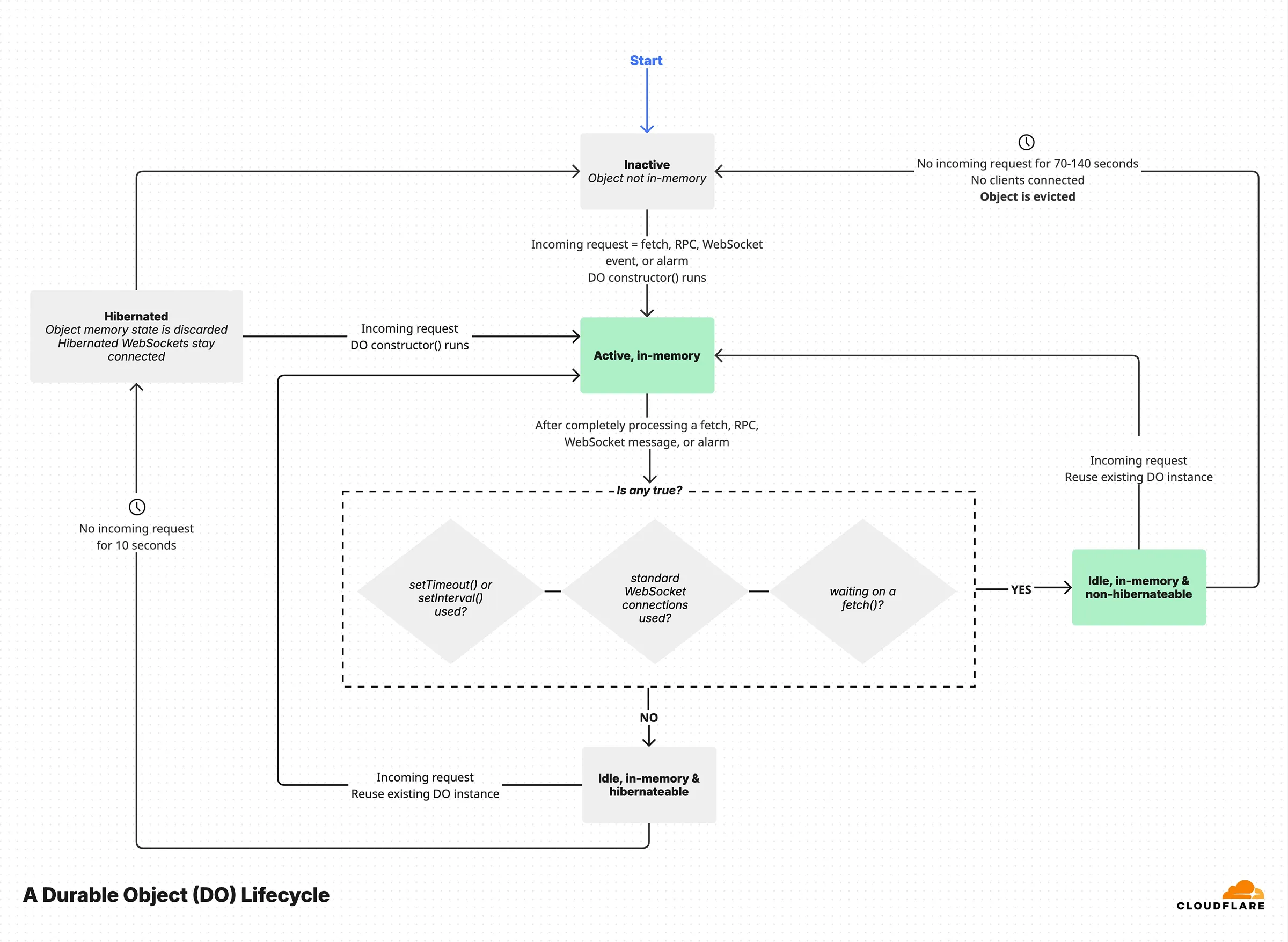
Durable Objects: Stateful Serverless, Finally?
Durable Objects introduce a fundamentally different approach to serverless state management. Instead of relying on external databases for every read and write, Durable Objects allow you to maintain state directly within Cloudflare’s network. Think of them as uniquely identified, stateful actors. This dramatically reduces latency and simplifies application logic.
A key principle of Durable Objects is the single-writer, multiple-reader model. Only one request can modify the object’s state at any given time, ensuring consistency. While I'm not yet clear on the precise consistency guarantees, this design is well-suited for coordinating actions between users, managing game state where you need authoritative control, or implementing real-time collaboration features. This is a departure from the stateless nature of traditional serverless, offering a more familiar programming model for developers accustomed to stateful applications.
This isn’t to say Durable Objects eliminate databases entirely. They excel at managing frequently accessed, rapidly changing state. Less frequently updated data, or data requiring complex querying capabilities, still benefits from a dedicated database. It’s about choosing the right tool for the job.
- Single Writer: Ensures data consistency.
- Multiple Readers: Allows concurrent access to data.
- Stateful: Maintains data between requests without external databases.
Agents: Bringing AI Closer to the Edge
Cloudflare Agents allow you to deploy and execute AI models directly within Cloudflare’s global network. This is a significant departure from the typical approach of sending data to a centralized AI service for processing. By bringing the AI closer to the user, Agents reduce latency, improve privacy, and potentially lower costs.
The benefits are clear: less data needs to travel across the internet, resulting in faster response times. Processing data at the edge also minimizes the risk of exposing sensitive information during transit. While detailed SDK information is currently limited, the core idea is to leverage Cloudflare’s infrastructure to run AI models efficiently and securely. The ability to create custom agents opens up a wide range of possibilities, from personalized content filtering to real-time fraud detection.
How Agents and Durable Objects Work Together
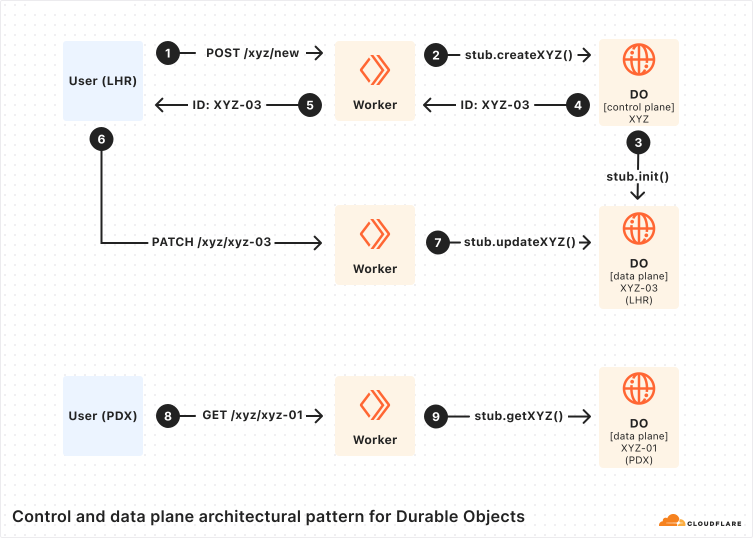
The real power of Cloudflare Agents and Durable Objects emerges when they are used in conjunction. Durable Objects can act as hosts for Agents, providing them with stateful memory and the ability to coordinate actions. This combination is incredibly compelling for applications requiring both AI-powered intelligence and persistent state.
Consider a content moderation system. An Agent could analyze user-generated content for inappropriate language or images. A Durable Object could track each user’s reputation, storing information about past violations and warnings. The Agent would consult the Durable Object to determine the appropriate action – whether to flag the content, issue a warning, or ban the user. This setup ensures that moderation decisions are consistent and based on a user’s history.
This synergy isn’t limited to content moderation. Any application requiring AI-driven decisions based on persistent user data – such as personalized recommendations, dynamic pricing, or fraud prevention – can benefit from this integrated approach. Durable Objects provide the memory, while Agents provide the intelligence.
Use Cases: Where Do These Technologies Shine?
The combination of statefulness and edge computing opens up a variety of interesting use cases. Real-time collaboration tools, like collaborative document editors or whiteboards, can leverage Durable Objects to synchronize state between users and Agents to provide intelligent features such as auto-completion or grammar checking. Online gaming benefits from low-latency state management for game logic and player interactions.
Personalized recommendations, particularly in e-commerce or media streaming, can be improved by using Agents to analyze user behavior and Durable Objects to store user preferences. IoT device management can also benefit from this architecture, allowing for real-time data processing and control at the edge. These aren’t necessarily new application categories, but Cloudflare Agents and Durable Objects offer a potentially more efficient and scalable way to build them.
- Real-time collaboration: Synchronized state and intelligent features.
- Online gaming: Low-latency game logic and player interactions.
- Personalized recommendations: AI-driven suggestions based on user preferences.
- IoT device management: Real-time data processing and control.
Comparative Analysis: Cloudflare Durable Objects & Agents vs. Other Architectures
| Criteria | Traditional Serverless Functions | Centralized Database | Dedicated Servers | Durable Objects + Agents |
|---|---|---|---|---|
| Latency | Generally good, dependent on cold starts. | Potentially higher due to network hops and database contention. | Lowest, if geographically close to users. | Potentially very low, especially with Agents colocated with users and Durable Objects providing fast state access. |
| Scalability | Scales automatically, but can have concurrency limits. | Scalability requires complex sharding and replication strategies. | Requires manual scaling and infrastructure provisioning. | Highly scalable; Durable Objects distribute state, Agents handle concurrency. |
| State Management | Stateless by design; relies on external storage. | Centralized state, potential bottleneck and consistency issues. | State managed on the server; requires careful design for persistence. | Durable Objects provide strong consistency and distributed state. |
| Complexity | Relatively simple for basic use cases. | High complexity for scaling and maintaining consistency. | Highest complexity; requires full infrastructure management. | Moderate complexity; requires understanding of Durable Objects and Agent concepts. |
| Cost | Pay-per-use; can be expensive for constant traffic. | Costly for high read/write volumes and scaling. | Highest cost; includes hardware, maintenance, and operational expenses. | Potentially cost-effective; pay for usage, reduced infrastructure overhead. |
| Development Effort | Fast to deploy simple functions. | Significant effort for schema design and optimization. | Highest development effort; requires full stack expertise. | Moderate development effort; new concepts to learn, but Cloudflare provides tooling. |
| Data Consistency | Eventual consistency often inherent. | Requires careful transaction management. | Developer responsibility. | Strong consistency within a Durable Object. |
Qualitative comparison based on the article research brief. Confirm current product details in the official docs before making implementation choices.
Limitations and Considerations: What You Need to Know
Cloudflare Agents and Durable Objects have limitations. Vendor lock-in is a potential concern, as your application will be tightly coupled to Cloudflare’s infrastructure. Debugging applications built on these technologies can also be more complex than traditional serverless development, as you're dealing with distributed state and asynchronous interactions.
You’ll have limited control over the underlying infrastructure, which may be a concern for applications with strict performance or security requirements. Furthermore, these technologies are relatively new, meaning the ecosystem is still evolving. The tooling and documentation are improving, but they aren’t as mature as those for more established serverless platforms. Consider these factors carefully before committing to a full-scale deployment.
No comments yet. Be the first to share your thoughts!