
Stateful Edge Computing: Introducing the Challenge
Building applications that require remembering information – stateful apps – presents a unique challenge at the edge. Traditionally, serverless functions are designed to be stateless, meaning each execution is independent and doesn't retain data from previous calls. This works well for many tasks, but falls short when you need low-latency access to shared data, or when coordinating actions between multiple users in real-time.
The problem is magnified when you want this state close to your users. Sending every request back to a central database adds latency, impacting user experience. A globally distributed application needs a way to maintain consistent state across many locations. Cloudflare recognized this gap and has been developing solutions to address the need for stateful edge computing. They've started with Durable Objects, and more recently, Cloudflare Agents.

Durable Objects: The Core Building Block
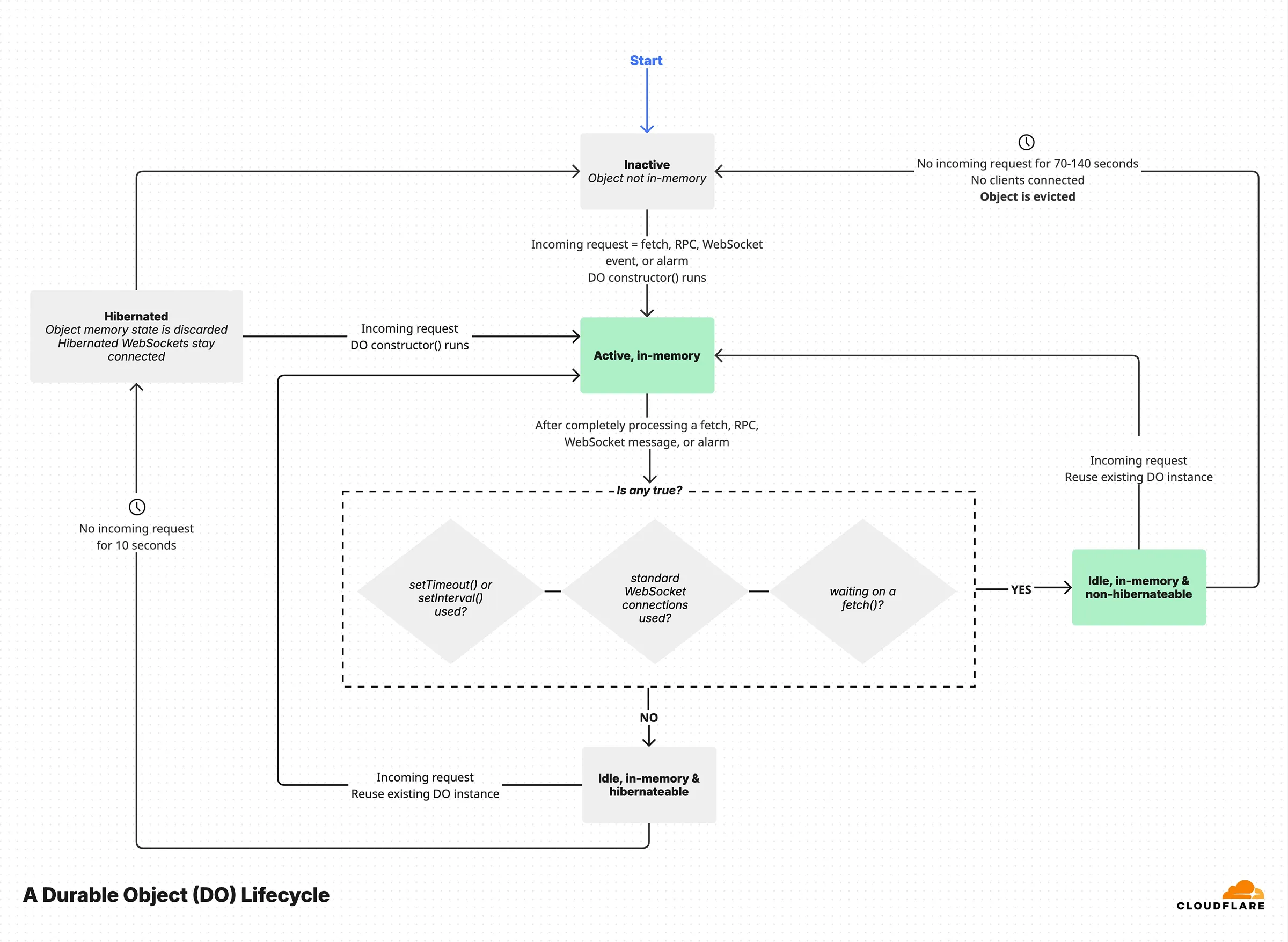
Durable Objects are Cloudflare’s foundational technology for stateful applications. Think of them as stateful "micro-servers’ that run directly on Cloudflare"s edge network. Each Durable Object gets its own dedicated compute and storage, allowing it to maintain state between requests. This is a significant departure from the traditional stateless serverless model.
A key feature is global uniqueness. Every Durable Object has a globally unique identifier, meaning you can reliably coordinate actions between clients located anywhere in the world. Data persistence is built-in, with options for using SQLite for simpler data models, or key-value storage for more complex needs. On paid plans, you get 10 GB of storage per object, and there’s no limit to the number of objects you can create within your account. This makes them suitable for a wide range of use cases.
Creating a Durable Object involves defining a Worker that handles incoming requests. You interact with the object using its unique ID, sending messages to trigger functions within your Worker. This Worker code manages the state, responding to requests and updating the storage as needed. It’s a fairly low-level approach, requiring you to handle much of the state management logic yourself.
- Global Uniqueness: Each object has a unique ID worldwide.
- Persistent Storage: SQLite or key-value backends.
- Edge Computing: Low latency by running close to users.
- Storage Limits: 10 GB per object (paid plans).
Understanding the Durable Object Worker Model
The core of a Durable Object is the Worker script that defines its behavior and manages its state. This script receives incoming requests and determines how to update or retrieve data from the object's storage. You define the state as variables within the Worker's scope, and access it through functions you implement. Managing state correctly matters when handling concurrent requests.
Durable Objects handle concurrency by serializing requests to a single object instance. This ensures that only one request is processed at a time, preventing race conditions and data corruption. However, this also means that high concurrency can lead to queuing and increased latency. You need to consider your application’s concurrency requirements. Best practices include minimizing the time spent processing each request and optimizing your storage access patterns. You'll want to be mindful of SQLite limitations if you choose that backend.
- Define the state as variables within the Worker.
- Implement functions to access and modify the state.
- Handle concurrency by serializing requests.
Implementing a Stateful Counter with Durable Objects
This example demonstrates the core functionality of Cloudflare Durable Objects by implementing a simple counter that maintains state across requests. The Durable Object acts as a stateful micro-server that can handle multiple operations while preserving data integrity.
// Durable Object class definition
export class CounterDurableObject {
  constructor(state, env) {
    this.state = state;
    this.env = env;
  }

  async fetch(request) {
    try {
      const url = new URL(request.url);
      const pathname = url.pathname;

      if (pathname === '/increment') {
        // Get current counter value from durable storage
        let count = await this.state.storage.get('counter') || 0;

        // Increment the counter
        count++;

        // Store the updated value
        await this.state.storage.put('counter', count);

        return new Response(JSON.stringify({ count }), {
          headers: { 'Content-Type': 'application/json' }
        });
      }

      if (pathname === '/get') {
        // Get current counter value
        const count = await this.state.storage.get('counter') || 0;

        return new Response(JSON.stringify({ count }), {
          headers: { 'Content-Type': 'application/json' }
        });
      }

      return new Response('Not Found', { status: 404 });

    } catch (error) {
      console.error('Durable Object error:', error);
      return new Response(
        JSON.stringify({ error: 'Internal server error' }),
        {
          status: 500,
          headers: { 'Content-Type': 'application/json' }
        }
      );
    }
  }
}

// Worker script to handle requests and route to Durable Object
export default {
  async fetch(request, env, ctx) {
    try {
      // Create a unique ID for the Durable Object instance
      const id = env.COUNTER_DURABLE_OBJECT.idFromName('global-counter');

      // Get a reference to the Durable Object
      const durableObject = env.COUNTER_DURABLE_OBJECT.get(id);

      // Forward the request to the Durable Object
      return await durableObject.fetch(request);

    } catch (error) {
      console.error('Worker error:', error);
      return new Response(
        JSON.stringify({ error: 'Service unavailable' }),
        {
          status: 503,
          headers: { 'Content-Type': 'application/json' }
        }
      );
    }
  }
}
This implementation showcases how Durable Objects provide both compute and storage in a single primitive. The counter state persists across requests and deployments, demonstrating the foundational technology that powers higher-level abstractions like Cloudflare Agents. Error handling ensures graceful degradation when storage operations fail or unexpected errors occur.
Cloudflare Agents: Abstraction for AI Workloads
Cloudflare Agents are a newer offering built directly on top of Durable Objects. They aren’t a replacement for Durable Objects, but rather a higher-level abstraction designed specifically for building AI-powered applications. The goal is to simplify the development process for agentic workflows, where applications can autonomously perform tasks and interact with the world.
Agents inherit all the benefits of Durable Objects – stateful execution at the edge, global uniqueness, and persistent storage. But they add several features tailored for AI, including a built-in SQL database, WebSocket connections for real-time communication, and scheduling capabilities for automating tasks. They also have built-in support for human-in-the-loop workflows, allowing you to intervene and guide the agent’s actions when necessary. This makes them particularly well-suited for complex AI applications.
Agents vs. Durable Objects: A Practical Comparison
The key difference lies in the level of abstraction. Durable Objects provide a foundational building block, giving you full control over state management and application logic. Agents, on the other hand, offer a more opinionated framework with built-in features and abstractions optimized for AI workloads. Choosing between them depends on your specific needs.
If you’re building a general-purpose stateful application, or you require fine-grained control over every aspect of the system, Durable Objects are likely the better choice. If you’re focused on building an AI-powered agent, and you can benefit from the built-in features and abstractions, Agents can significantly speed up development. Agents handle much of the boilerplate for things like database connections and WebSocket management, letting you focus on the agent’s core logic. However, that convenience comes at the cost of some flexibility.
- Durable Objects: Lower level, more control, general-purpose.
- Cloudflare Agents: Higher level, AI-focused, faster development.
Cloudflare Agents vs. Durable Objects: A Comparison
| Use Case | Development Effort | State Management Complexity | Built-in Features | AI Focus |
|---|---|---|---|---|
| General Stateful Applications (e.g., session management) | Medium | Medium | SQLite, Key-Value Storage | No |
| AI Agents (e.g., autonomous tasks) | Medium | Medium | SQL database, WebSockets, Scheduling | Yes |
| Chatbots | Medium | Medium | WebSockets, SQL database | Yes |
| Simple Game Servers | Medium | Low | Key-Value Storage | No |
| Real-time Collaboration Tools | High | High | WebSockets | No |
| Applications requiring globally unique identifiers | Low | Low | Global Uniqueness | No |
| Applications needing low latency | Low | Low | Edge Computing | No |
| Applications needing persistent storage | Low | Medium | SQLite, Key-Value Storage | No |
Illustrative comparison based on the article research brief. Verify current pricing, limits, and product details in the official docs before relying on it.
Use Cases: Where Each Solution Shines
Durable Objects are excellent for applications requiring reliable state management. Consider session management, where you need to store user-specific data across multiple requests. They’re also well-suited for real-time games, where you need to track the state of the game world and coordinate actions between players. Collaborative editing tools can also leverage Durable Objects to maintain consistent document state across multiple users.
Cloudflare Agents excel in scenarios involving AI and automation. Imagine building an AI-powered chatbot that can answer customer questions and resolve issues. Agents can handle the conversation state, access knowledge bases, and even trigger automated workflows. Personalized recommendation engines can use Agents to track user preferences and deliver tailored recommendations. Automated workflows, like processing invoices or scheduling appointments, are also a strong fit.
Future Considerations and Limitations
Both Durable Objects and Agents are relatively new technologies, and there are still limitations to consider. Scaling Durable Objects to handle extremely high concurrency can be challenging, as requests are serialized. The 10 GB storage limit per object may also be a constraint for some applications. Agents, being built on Durable Objects, inherit these limitations, and also have the added complexity of managing the agentic workflow.
Currently, Agents pricing isn’t publicly available, which could be a factor in adoption. Applications requiring extremely complex state management or very low latency might still find themselves needing to explore alternative solutions. Cloudflare is currently working on scalability and storage capacity for these tools.
No comments yet. Be the first to share your thoughts!