
Coding with GPT-5
Coding is changing fast. With GPT-5, you don't need to obsess over every semicolon anymore. I've found that the real skill now is breaking down a problem so the AI actually understands what you want. It isn't about the AI taking over; it's about using these models to build things in hours that used to take us weeks.
These LLMs aren’t simply sophisticated autocomplete tools. They can generate entire code blocks from natural language prompts, identify bugs, and even suggest improvements to existing code. This capability dramatically lowers the barrier to entry for aspiring developers. However, it’s a mistake to believe these tools eliminate the need for a strong foundation in programming principles. A misunderstanding of algorithms, data structures, and software design will quickly become apparent when the AI’s output requires debugging or modification.
The courses discussed here reflect this change. They aren’t just teaching you how to code, but how to code with AI. We’ll look at platforms incorporating GPT-5 and similar technologies, evaluating them based on their ability to facilitate genuine learning, not just rapid prototyping. The goal is to find courses that empower you to leverage AI effectively, while still building a solid understanding of the underlying concepts. This isn’t about finding the easiest path – it’s about finding the most effective path in this new era.
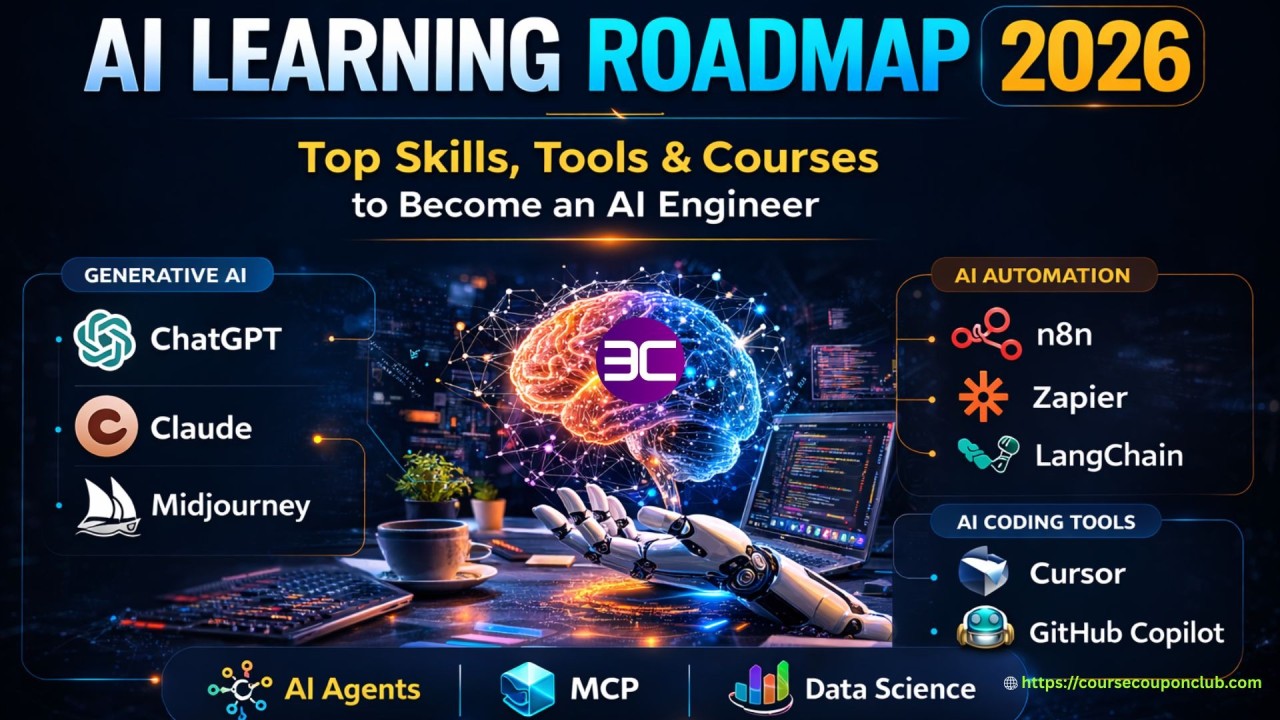
7 platforms worth your time
The market for online programming education is crowded, but a select few platforms are actively integrating AI to enhance the learning experience. It’s important to differentiate between courses that simply use AI tools and those that teach you how to leverage them effectively. Many platforms are adding AI features as an afterthought; the courses below are building AI integration into their core curriculum.
Codecademy stands out with its AI Builder, which allows users to generate functional prototypes from simple prompts. Targeted at beginners, Codecademy covers languages like Python, JavaScript, and HTML/CSS. The AI features focus on code generation and debugging assistance. Pricing varies; a Pro subscription costs around $20/month, unlocking access to all courses and the AI Builder. Codecademy’s strength lies in its interactive learning environment, which complements the AI-powered tools.
Coursera offers a wide range of programming specializations from top universities. Several, such as the “Applied Data Science with Python Specialization” offered by the University of Michigan, now incorporate AI-powered coding assistants. These assistants provide code completion, error detection, and explanations of complex concepts. Coursera's pricing is subscription-based, typically around $39-$89 per month per specialization, or you can audit courses for free (without certificate access).
SitePoint provides courses focused on web development, with an increasing emphasis on AI-assisted coding. They offer tutorials on using AI tools to generate HTML, CSS, and JavaScript code. SitePoint's courses are generally more focused on practical application than theoretical foundations. A SitePoint Premium subscription is approximately $29/month, giving access to all courses and resources.
Treehouse is another popular platform offering courses in web development, mobile development, and data science. While not as prominently advertising GPT-5 integration as Codecademy, they are incorporating AI-powered code review tools and personalized learning paths. Treehouse subscriptions run around $25/month. Treehouse’s focus is on project-based learning, which is well-suited to AI assistance.
Udemy hosts a vast number of individual courses, many of which now feature AI-assisted learning components. According to a recent report by a Udemy instructor, So (Medium.com, 2026), courses focusing on AI coding tools are seeing significant enrollment increases. Pricing on Udemy varies wildly, from $10 to $200+ per course, depending on the instructor and content. Quality control can be an issue, so carefully review course ratings and reviews.
DataCamp specializes in data science and analytics courses. They’ve integrated AI-powered tools to help students debug code, optimize performance, and generate data visualizations. DataCamp subscriptions start around $25/month. Their strength is the hands-on, interactive coding exercises that are well-suited for AI assistance.
Finally, Code Avengers offers a gamified approach to learning to code. They are beginning to integrate AI features to provide personalized feedback and guidance. Code Avengers subscriptions are approximately $20/month. This platform is best for younger learners or those who prefer a more playful learning experience.
Beyond the Big Platforms: Niche AI Coding Courses
While Codecademy and Coursera dominate the AI-assisted programming course market, several smaller platforms offer specialized courses. DeepLearning.AI, founded by Andrew Ng, offers courses specifically focused on AI and machine learning, and some of their content incorporates AI-assisted coding exercises. The focus is heavily on the theoretical underpinnings of AI, rather than simply using AI tools.
For game development, platforms like Zenva Academy are beginning to integrate AI features to assist with asset creation and code generation. These courses are often more project-focused, allowing students to build complete games with AI assistance. However, the quality and depth of these courses can vary significantly, so thorough research is essential.
Be cautious when evaluating niche courses. Look for instructors with strong credentials and positive student reviews. Verify that the course content is up-to-date and relevant to the latest AI technologies. Don’t be swayed by overly optimistic marketing claims.
How to spot a bad AI course
AI assistance in programming courses can be a powerful tool, but it’s essential to evaluate its quality and effectiveness. Look for courses that provide clear explanations of the AI’s suggestions and encourage students to understand the underlying code. Red flags include courses that simply generate code without explaining why it works, or that encourage blind acceptance of the AI’s output.
A good course will emphasize the importance of code review and debugging. You should be able to identify errors in the AI’s output and understand how to fix them. The goal is to learn from the AI, not to become reliant on it. Don’t treat the AI as a teacher; treat it as a tool.
Ultimately, the best AI-assisted programming course is the one that helps you build a solid foundation in programming principles while leveraging the power of AI to accelerate your learning. Remember that AI is a means to an end, not an end in itself. The ability to think critically, solve problems, and write clean, efficient code remains paramount, even in the age of GPT-5.
Essential Programming Textbooks for AI-Assisted Learning

Comprehensive coverage of fundamental algorithms · Detailed explanations and proofs · Widely recognized as a standard reference
This definitive text provides the theoretical bedrock for understanding complex algorithms, essential for leveraging AI coding assistants effectively.

189 real-world interview problems · Detailed solutions and explanations · Covers common data structures and algorithm topics
Mastering these interview-style problems, with AI assistance, sharpens your problem-solving skills and prepares you for technical assessments.

Principles of writing clean, readable code · Best practices for software development · Focus on maintainability and craftsmanship
Learn to write code that is not only functional but also elegant and maintainable, a skill amplified by AI's ability to suggest improvements.

In-depth exploration of data structures · Python implementation of algorithms · Focus on efficiency and performance
Gain a deep understanding of how data is organized and manipulated in Python, enabling you to build more efficient applications with AI support.

Timeless advice for software development · Practical strategies for programmers · Focus on continuous improvement and mastery
This essential guide offers enduring wisdom on becoming a more effective and productive programmer, complementing the speed and insights provided by AI tools.
As an Amazon Associate I earn from qualifying purchases. Prices may vary.
Usefulness of AI Assistance Features by Learning Stage (2026)
| Feature | Beginner | Intermediate | Advanced |
|---|---|---|---|
| Code Completion | Highly Useful | Moderately Useful | Limited Use |
| Debugging | Moderately Useful | Highly Useful | Moderately Useful |
| Documentation Generation | Limited Use | Moderately Useful | Highly Useful |
| Test Case Generation | Limited Use | Moderately Useful | Highly Useful |
| Code Explanation | Highly Useful | Moderately Useful | Limited Use |
| Refactoring Suggestions | Limited Use | Highly Useful | Highly Useful |
Illustrative comparison based on the article research brief. Verify current pricing, limits, and product details in the official docs before relying on it.
No comments yet. Be the first to share your thoughts!